Latest Case Studies & White Papers

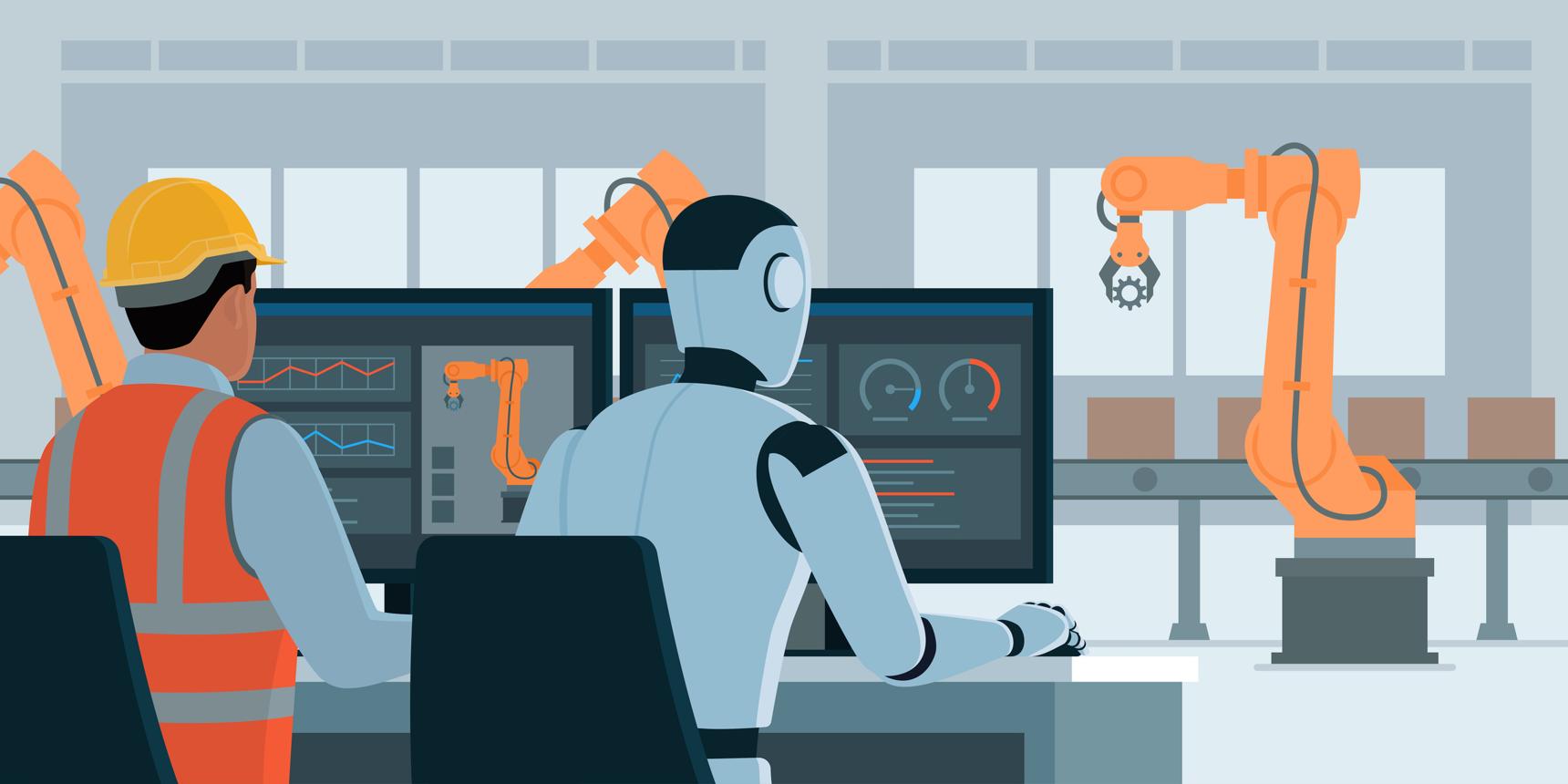
Case Study: How Artificial Intelligence Reduced Unplanned Downtime in a Manufacturing Facility

Leveraging AI-Powered Predictive Maintenance to Improve Reliability and Asset Performance

For many manufacturers, unplanned downtime remains one of the biggest challenges affecting productivity, maintenance budgets and operational efficiency. Traditional maintenance strategies such as reactive repairs or time-based preventative maintenance often result in unnecessary interventions or unexpected equipment failures.

A leading UK manufacturing facility recently implemented an Artificial Intelligence (AI) driven predictive maintenance programme to address recurring issues with critical rotating equipment, including pumps, motors and gearboxes.

The Challenge

The facility operated a range of production assets running continuously across multiple shifts. Despite having a preventative maintenance programme in place, the maintenance team continued to experience unexpected failures, particularly involving electric motors and bearing assemblies.

These failures resulted in:

  • Production interruptions
  • Increased maintenance costs
  • Emergency contractor callouts
  • Higher spare parts consumption
  • Reduced Overall Equipment Effectiveness (OEE)

The maintenance department needed a more proactive approach that could identify potential failures before they occurred.

The Solution

The company deployed an AI-powered condition monitoring platform that continuously collected data from wireless vibration, temperature and power consumption sensors installed on critical assets.

The AI system analysed thousands of operating parameters in real time, including:

  • Vibration signatures
  • Bearing condition
  • Motor current trends
  • Temperature fluctuations
  • Operating loads
  • Historical maintenance records

Using machine learning algorithms, the platform established normal operating conditions for each asset and automatically identified anomalies that could indicate developing faults.

Early Detection of Bearing Failure

Within three months of implementation, the AI platform detected abnormal vibration patterns on a production line gearbox.

Although the equipment was still operating normally, the system identified a developing bearing defect and generated a maintenance alert.

Maintenance engineers investigated the issue and confirmed early-stage bearing wear that had not yet been detected during routine inspections.

The bearing was replaced during a planned maintenance shutdown, preventing a catastrophic failure that would have resulted in approximately 18 hours of lost production.

Results Achieved

Following twelve months of operation, the facility reported significant improvements:

  • 35% reduction in unplanned downtime
  • 28% reduction in maintenance costs
  • 22% increase in equipment availability
  • 40% reduction in emergency repairs
  • Improved maintenance planning and scheduling
  • Extended asset life expectancy

The maintenance team also gained greater visibility of asset health across the site, allowing resources to be focused on equipment showing genuine signs of deterioration rather than relying solely on calendar-based maintenance schedules.

Beyond Predictive Maintenance

The company has since expanded its AI strategy to include:

  • Automated work order generation through its CMMS
  • Spare parts inventory optimisation
  • Failure mode prediction
  • Energy consumption monitoring
  • Root cause analysis support

By integrating AI with existing maintenance management systems, engineers can make more informed decisions while reducing administrative workloads.

Looking Ahead

Artificial Intelligence is rapidly becoming an essential tool within modern maintenance and reliability programmes. While AI does not replace the knowledge and experience of maintenance professionals, it provides valuable insights that help teams identify potential failures earlier and prioritise interventions more effectively.

As Industry 4.0 technologies continue to evolve, organisations that embrace AI-powered maintenance strategies are likely to achieve greater equipment reliability, improved operational efficiency and stronger long-term asset performance.

For maintenance managers seeking to move beyond reactive maintenance, AI offers a practical and proven pathway towards a more predictive and data-driven future.

Hoist & Winch provides the lift for modern flour mill build and maintenance

When constructing a modern high-speed flour mill, efficient installation and long-term maintenance of plant equipment demand a carefully planned lifting solution. For a recent project, the main contractor turned to Hoist & Winch Ltd, one of the UK's leading lifting equipment companies. Hoist & Winch specified, supplied and installed a two-phase hoisting solution capable of supporting both the plant installation phase and ongoing maintenance activities once the facility became operational.

The project required a flexible approach. During installation, contractors required a high-capacity hoist capable of lifting heavy process equipment through a dedicated lift shaft. Upon completion of plant installation and commissioning, however, the requirement shifted to a permanent, high-speed lifting solution to support routine maintenance of the mill’s processing equipment.

Following site meetings and consultations with plant designers and project managers from the main contractor, Hoist & Winch proposed a turnkey lifting package that could meet both requirements.

For the short-term installation phase, Hoist & Winch supplied a 10t safe working load (SWL) JDN air-powered chain hoist offering 30m of lifting height. Mounted in an air motor-powered trolley, the hoist was complemented by a portable diesel-powered air compressor and air hoses. Hoist & Winch also undertook installation and commissioning of the hoist, along with load testing and LOLER certification of the customer’s pre-installed hoist runway beam. Operator handover training was subsequently provided for plant installation contractors.

Installing the temporary hoist system formed phase 1 of the project. To facilitate this work, the site scaffolding contractor constructed a platform over the lift shaft in accordance with Hoist & Winch specifications. The 10t air-powered hoist unit was raised to installation level using a temporarily mounted 2t SWL JDN air-powered chain hoist fixed to the underside of the runway beam.

Once positioned beneath the beam, installation of the 10t hoist took place using a dedicated lifting arrangement comprising a pair of T-shaped lifting frames and four 1t SWL manual chain blocks. This configuration enabled engineers to mount the hoist trolley safely to the runway beam by initially opening and then closing the trolley width around the beam section.

Following installation checks and connecting the air supply, Hoist & Winch performed dynamic load testing of both the hoist and runway beam using a 10t test load over the full 30m lifting height. This process was followed by a 125% static proof load test at low level. With testing successfully complete, Hoist & Winch delivered operator handover training to the installation contractors responsible for lifting the mill’s process plant equipment into position.

Phase 2 of the project involved removing the temporary air-powered hoist and installing the permanent lifting solution: a 3.2t SWL Stahl electric wire rope hoist with 30m lifting height. Mounted on a motor-powered trolley and operating with a single rope fall, the hoist unit delivers a very high main lifting speed of 16 m/min to minimise plant downtime during maintenance lifts through the access shaft and 2.6 m/min slow lifting speed for precise load laydown at the load landing level.

Hoist & Winch conducted installation, commissioning, load testing and LOLER certification of the permanent hoist system, before providing handover training for the mill’s maintenance personnel.

“Projects like this demonstrate the value of careful planning and technical collaboration to deliver safe, efficient lifting solutions that support both the construction and long-term operation of complex industrial facilities,” says Hoist & Winch Director Andy Allen. “We subsequently secured the contract for annual hoist inspection and maintenance.”

Visit www.hoistandwinch.co.uk for further information and to view recent case studies.

Dam wall proves no obstacle for Hoist & Winch

With many successful water industry infrastructure projects under its belt, leading industrial lifting equipment supplier Hoist & Winch was once again approached to provide a comprehensive and robustly tested lifting solution for a specialist marine subcontractor. This demanding reservoir application required the transfer of three large-diameter pumping station pipes – each weighing 30 tonnes – across the reservoir waters and up the inclined slope of its dam wall. As always, Hoist & Winch proved up to the task.

This complex hire equipment project required a triple-aspect approach. Firstly, to move each pipe across the water, Hoist & Winch had to supply, install, commission, load-test and LOLER-certify two air-powered chain hoists offering 20-tonne safe working load (SWL). The company proposed a pair of JDN top-hook suspension air hoists, each with its own load chain collector box, air service unit and air supply hoses. The hoist units are each controlled by an individually connected, heavy-duty, air-powered pendant control. They were fixed to the customer’s free-standing fixed gantries on two fabricated floating pontoons (20t SWL), which Hoist & Winch also had to load-test and LOLER-certify.

Secondly, Hoist & Winch was tasked with providing a similar package of services for a large-capacity hydraulic winch system. Here, the company recommended a 12t SWL floor-mounted hydraulic winch with wire rope, diesel-powered hydraulic power unit, joystick control stand and interconnecting hoses. The winch was required to pull each pipe up the inclined slope of the reservoir’s dam wall in conjunction with two rail-mounted travelling gantries (20t SWL) fabricated by the customer.

                                                                                                                                                            Continued ……

Lastly, the customer wanted Hoist & Winch to supply four 15t SWL manual chain blocks. The Tiger top-hook suspension type manual chain blocks proposed by Hoist & Winch would support each pipe from the rail-mounted travelling gantries following transfer from the air hoists in readiness for winching up the slope of the dam wall.

Hoist & Winch technical support experts partnered closely with the main contractor’s civil and mechanical engineers throughout this safety-critical project, with strict approval procedures in place.

Load testing of the two air hoists and their supporting gantries was facilitated by a 20t/25t skid-mounted dynamic proof-test load. Working closely with the marine subcontractor’s dive team, the test weights were initially positioned on the reservoir bed.

Dynamic load testing of the hydraulic winch took place in two stages, firstly using an interim site test load comprising lighter concrete components, which also required winching up the reservoir’s dam wall. A further dynamic test was performed on the day of winching the first pipe. This activity was closely monitored to check all aspects of the winching system installation as work proceeded. Indeed, Hoist & Winch was tasked with operating the winch for the full duration of the first pipe lift up the dam wall slope while maintaining constant radio communication with the overall lift supervisor. As the night time closed in the very precise lifting operation had to continue and so the work was completed under floodlights.

Hoist & Winch also provided various other aspects of technical consultancy, including guidance on lifting equipment legislation, lifting operation planning/management, the specification and procurement of a portable diesel-powered compressor, and operator handover training.

                                                                                                                                                            Continued ……

“The final outcome was the highly successful movement up the reservoir dam wall of all three pipes in a finely controlled and smooth manner, which delighted both our customer and the end client,” says Hoist & Winch Director Andy Allen. “It’s yet another successful example of how our extensive experience and deep technical knowledge can provide the optimal solution for some of industry’s most challenging lifting and transfer operations.”

Visit www.hoistandwinch.co.uk for further information and to view recent case studies.

Enerpac Strand Jack for 3km Toulouse Cable Car Cable Maintenance

POMA, the world leader in cable transportation, has used Enerpac strand jack technology to streamline aerial cable maintenance operations on the 3 km Téléo cable car in Toulouse - the longest urban cable car ever built in France. Developed in collaboration with cable maintenance specialist, COMAG, the new system significantly reduces cable tensioning times.
The 3-kilometer Téléo cable car route connects Paul Sabatier University to the Oncopole Institute via the Rangueil Hospital, in just 10 minutes, with an overflight up to 70 meters above ground level. It uses four carrier cables, with two carrier cables per track, as well as a looped traction cable. The cabins run on these cables, similar to a railway track. The cables run without breaks from Paul Sabatier University to Oncopole-Lise Enjalbert station.
Rope repositioning is a key part of cable car maintenance. POMA wished to optimise the time required for the operation and, above all, to leave the cable sliders in position by pulling two track ropes at the same time. To achieve this, the two track ropes were attached to a lifting beam which in turn was attached to an Enerpac HSL 20006 strand jack. By stroking the strand jack, the cables can be tensioned up to a maximum of 240 tons in incremental steps of 480 mm.
After slackening the cables at Paul Sabatier station, the track ropes were tensioned by the strand jack positioned at the Oncopole-Lise Enjalbert terminus 3 km away - at the end of the cable car run. During the tensioning operation, 30 m of cable were moved to regain the correct cable position.
“Pulling both cables at the same time, in perfect synchronisation, was a major objective of the operation, until now we’re relied on a pulling winch and hauling system for each cable, a time consuming process,” said David Blanchet, project manager, COMAG. “The Enerpac strand jack was the right choice for us thanks to its operating speed, ease of use and small size, which allowed us to place it between the two track ropes in a horizontal frame. We look forward to deploying the stand jack system on other cable maintenance projects.”
Enerpac Strand Jack technology
The Enerpac HSL 20006 strand jack was supplied by Faure Technologies, an authorised Enerpac distributor and strategic Enerpac Heavy Lifting Technology (HLT) partner. Throughout the project, Faure Technologies played a key role in supporting POMA and COMAG. This collaboration reflects the strong partnership between Enerpac and HLT, as well as Faure Technologies’ dedication to providing reliable and high-quality solutions.
The Enerpac strand jack is a hydraulic lifting and tensioning device that works by gripping and pulling on multiple steel strands in a controlled, step-by-step manner. By alternately gripping and releasing the strands, the jack effectively ‘displaces’ or ‘lifts’ heavy loads.
For more information on Enerpac Strand Jacks, visit www.enerpac.com.
For more information on POMA, visit www.poma.net.

Engineering Reliability: From Breakdown to Breakthrough

bulk_handling.jpeg

How Data-Driven Design and Predictive Care Are Revolutionizing Bulk Handling Systems

Author: Laura Villa, CEO

Every plant manager knows the sinking feeling: a critical piece of equipment fails during peak production. Downtime cascades through the operation. Crews scramble. Revenue evaporates by the hour. But what if you could see the failure coming weeks—or even months—before it happened?

This isn't science fiction. It's the new reality of predictive engineering, where advanced simulation meets real-time monitoring to transform bulk handling reliability from an art into a science.

Read the full article by clicking the link below.

ideco.docx

VIBRATION MONITORING PACKAGE IS IDEAL SOLUTION FOR COOLING TOWER FANS

sem.jpeg

Effective monitoring of critical infrastructure is an essential requirement across the power generation, Oil, Gas and Petrochem industries where smooth running and trouble-free system operation is vital, especially in today’s highly competitive and energy cost-conscious environment. Condition monitoring specialist SENSONICS are experts in developing highly effective monitoring systems based on over 50 years of experience, including vibration monitoring products. A good example of this is the recent completion of a cooling tower monitoring project at a major Petrochemicals plant.

The Project Engineer at the site confirmed they were looking for a suitable system to monitor and protect cooling tower fans to prevent issues in case of failure of the fan blades. The requirement would be for individual systems to monitor each of the twenty motor / gearbox driven fans which were located between the motors and fans around the base of the cooling tower.

Confirming the specific requirements of the application, the Project Engineer commented, “The fan speed is 131RPM / 2.18Hz and what we want is to have a single transducer mounted on the gearbox (each fan is mounted on the gearbox output shaft) and the issue we want to address is the potential failure of the fan blades. When this has happened, the vibration has been so severe it damaged the concrete platform that the fan assembly is mounted on, as well as damaging adjacent fans from the fan projectiles”. Also, it was confirmed that, “The atmosphere where the fan is mounted is very wet and windy as the fans pull moist air out of the cooling tower packing and blows it across the gearbox and motor.”

Confirmation of these specific issues and challenges initially suggested the need to install a suitably ranged 4-20mA vibration transducer and then feed this to a closely located unit that has the start / stop buttons for the fans, enabling the tripping of a fan if the vibration is too high.

There was also a need to feed the overall vibration levels to the main plant DCS system. Due to the specific requirements of this application the frequency of response of the transducers would need to be lower than below 2Hz and there was no requirement for any local display or further diagnostics. A simple system which would reliably trip the fan out if it were failing and additionally to give an indication on DCS for the overall vibration level.

Conclusion

Once the specific requirements of this vibration monitoring application were confirmed, Sensonics were able to suggest and supply a combination of their DN26 G3 dual channel protection system along with their VEL/GLF low frequency (slow speed) velocity transducers. Established in the condition monitoring market for many years Sensonics has supplied thousands of these compact and innovative, din rail mountable DN26 G3 dual channel vibration monitors which have delivered reliable and cost-effective vibration monitoring across a wide range of installations. This high performance fully programmable signal conditioning unit is capable of monitoring 2 channels of absolute vibration, shaft vibration or shaft position, while a third channel option is available for measuring speed or for use a phase reference.

To complete the solution for this application is Sensonics VEL/GLF, a low frequency velocity transducer (slow speed) option proved to be ideally suited to the large fans which were operating at a minimum RPM. This electro dynamic sensor provides a superior performance compared to piezo-electric devices by combining high measurement sensitivity with a frequency response down to 0.5 Hz.

This level of sensitivity, along with excellent noise performance, provides the necessary dynamic range required for detailed analysis of gearbox vibration, so is ideal for measuring velocity vibration on equipment with speeds down to 30 RPM. Furthermore, the VEL/GLF has advantages over traditional piezoelectric based velocity vibration sensors which are susceptible to many forms of interference in low frequency applications that can result in spurious readings and alarms.

As a result of its robust design, the VEL/GLF offers high noise immunity due to the low impedance electro dynamic nature of the sensor assembly.

In addition to the filtering of high frequency events and since no electronic integration is required, means the design of the sensor is immune to the saturation problems that impair the reliability of other piezoelectric devices.  

More at: https://www.sensonics.co.uk/vibration-position-monitoringhttps://www.sensonics.co.uk/vibration-position-monitoring  


Total Football, Total Asset Management: Why Maintenance is a Team Sport

Let’s get straight to the point: industrial maintenance isn’t a solo act. It’s not a single department heroically keeping the lights on and the machines running. It’s a team sport. And if you ask me, it’s not just like football, it is football.

Before you dismiss this as a gimmicky metaphor, hear me out. I’ve been obsessed with football since I was a kid. If I wasn't playing the game, I would be watching the game. I'm a big fan of the Dutch national team but blame my parents for being born two weeks too late. Two weeks before I was born, 'Oranje' won their biggest and only international title at the '88 European Championships. Being a fan hasn't always been easy, but I have kept myself busy.

I’ve also spent the last eight years deep in the world of enterprise asset management (EAM), working with industrial teams across Europe. And over time, I’ve noticed an uncanny parallel between the game I love and the profession I’ve grown to respect.

Teamwork Wins Titles, and Maintenance Goals

In football, no single player wins a match. Even the brightest striker needs the right ball at the right time. Likewise, maintenance doesn’t happen in a vacuum. It relies on operations to flag the early signs of failure. It depends on safety to ensure tasks are performed within compliance frameworks. And it only succeeds when all three - operations, maintenance, and safety - work in synchronization.

At Ultimo, we call this the Circle of Collaboration. Imagine a Rondo drill: players forming a circle, passing with precision, reading each other’s moves, and improving with each touch. Replace the ball with data, and that’s what good asset management looks like. Maintenance, operations, and safety all pass insights, decisions, and feedback in a closed loop. When the system works, it’s seamless. But like football, when one player’s out of sync, the whole formation falls apart.

Strategy, Not Firefighting

In football, winning isn’t just about running hard, it’s about playing smart. You analyze the opposition, you adapt your formation, you anticipate rather than react. The same mindset needs to apply on the plant floor.

Too often, maintenance teams operate in firefighting mode. Assets fail, engineers scramble, and every pound gets spent putting out fires. But with the right data - reliable, high-quality, and timely - you shift from reactive to proactive. You stop guessing and start coaching.

Just like a good football manager uses performance data to adjust tactics, reduce injuries, and maximize output, maintenance leaders must rely on actionable insights. Why did a failure occur? How long did it take to resolve? What could prevent it from happening again?

Data turns chaos into clarity. It turns downtime into learning. And most importantly, it empowers every department to pull in the same direction.

Who’s Who on the Field?

Let’s take the analogy even further. Picture your maintenance team as strikers. They’re the stars who ultimately score by keeping equipment running and reducing downtime. Operations? They are your first line of defence against disruption. They monitor assets daily, report anomalies, and provide the foundation. And safety? That’s your midfield - linking the two, controlling the tempo, recovering from mistakes, and ensuring everyone plays within the rules.  They assure you are in control, on the shop floor and on the pitch.

When these roles click, you achieve Total Asset Management, much like the Dutch pioneered Total Football - a system where every player adapts, covers, and contributes dynamically. It's not rigid. It's intelligent. And it's built on trust, communication, and shared objectives.

The Role of Technology: Your Coaching Staff

Even the best teams don’t rely solely on their players. Behind every successful club is a sophisticated support structure - analysts, coaches, nutritionists, psychologists. In asset management, this role is played by your systems and platforms.

An EAM solution like Ultimo isn’t just a digital tool. It’s your tactical playbook, your assistant coach, and your data analyst rolled into one. It integrates with your enterprise resource planning (ERP), connects to Internet of Things (IoT) devices, and supports core processes like work order management, safety procedures, and inspection planning. It centralizes your operations into a single source of truth.

Good EAM systems are designed to promote collaboration. Work permits, lockout/tagout procedures, risk assessments - they’re all baked into the same environment. That’s how you align departments without adding complexity.

The Spearman Principle: From Physics to Football to the Factory Floor

Still think data’s just a buzzword? Consider Liverpool FC’s William Spearman, a physicist who helped discover the Higgs boson at CERN before joining the club as a data analyst. He now applies scientific rigour to understand passing networks, space control, and player positioning.

What if we applied the same approach to maintenance?

What if every equipment failure was analysed like a missed scoring chance? Every maintenance route trained  like a set piece? Every inspection treated like match preparation?

This is not fantasy. It’s the logical evolution of our field. The best-run plants of the future will study their operations with the same level of detail and ambition that elite football teams study the pitch.

Final Whistle: It’s All About Trust

You can’t automate what you don’t understand. You can’t optimize what you don’t measure. And you can’t lead without trust. Trust in your data, your systems, and your team.

Whether you’re on the shop floor or the football pitch, the formula is the same:

  • Play as a team
  • Use your data wisely
  • Build trust that lasts.

If there’s one lesson football has taught me, and asset management has reinforced, it’s this: Data changes the game. But teamwork wins it.

Article written By Berend Booms, Head of EAM Insights at Ultimo


Hoist & Winch helps bridge the lifting expertise gap

Reinforcing the piers that support a major UK rail viaduct spanning a river estuary is no easy task, which is exactly why the specialist marine subcontractor appointed to undertake this project approached Hoist & Winch Ltd for the optimal lifting solution.

The brief provided to Hoist & Winch was for the supply of a turnkey lifting solution comprising two sets of four hoist units suitable for a marine environment. These hoists were to be suspended from temporary scaffold structures fixed to two separate motorised floating pontoons. As part of an innovative approach to a complex challenge, the hoist-mounted pontoons would serve to locate special horseshoe-shaped reinforcing concrete collars either side of one of the bridge piers at high tide, prior to joining the collar halves together above the water with connection pins. Finally, the collar halves would require lowering to the river estuary bed for permanent fixing to the piers with concrete at low tide, thus providing the necessary reinforcement.

To establish the optimal package of hire equipment, as well as site installation, load testing and additional technical support services, Hoist & Winch consulted extensively with both the motorised pontoon designers and installation personnel responsible for lowering the special concrete collars into position.

After reviewing all the information from project stakeholders, Hoist & Winch subsequently proposed eight JDN top-hook suspension air-powered hoist. Each of these 3t swl (safe working load) hoists featured its own heavy-duty steel lubricator coupled with appropriately sized air supply hoses. The two sets of four hoists units would be operated from their own individually connected, heavy-duty (brass) two-button pendant control.

In order to monitor the load applied to each hoist unit and assist with delivering a balanced collar lowering procedure, Hoist & Winch also provided eight telemetry load cells of bow-shackle design. These load cells served to connect each hoist unit to its local scaffold anchor support position, transmitting individual hoist load data via radio signal to a central laptop display. Armed with this data, the appointed person directing lifting operations could instruct each hoist operator accordingly to ensure the load was evenly distributed between each set of four hoists and that each collar was lowered into position while remaining level.

Prior to commencing the process of installing and lowering the concrete collars, Hoist & Winch carried out the installation of the eight air-powered hoist units. This work included pre-use inspection, static load/deflection testing, and LOLER (Lifting Operations and Lifting Equipment Regulations) certification of the temporary scaffold structure and complete hoisting system.

Hoist & Winch also provided technical consultancy as part of the overall package, delivering guidance on important project areas such as lifting equipment legislation, lifting operation planning and management, and specification and procurement of the portable diesel-powered air compressors to power the hoist units. In addition, the company delivered full handover training for operators.

Both the specialist marine subcontractor and end client were extremely pleased with the final outcome, which saw the successful installation of two sets of trial pier-reinforcing concrete collars to the viaduct as part of a safe and controlled process.

“This specialist project demanded the application of our expertise and experience to ensure a successful conclusion in line with the appropriate safety standards and high performance levels demanded by our client,” says Andy Allen, Director of Hoist & Winch Ltd. “We worked closely with project stakeholders to ensure the delivery of a robustly engineered lifting solution with precision control. Quality solutions and service from Hoist & Winch once again led to a project that concluded with the highest levels of customer satisfaction.”

e-mail: This email address is being protected from spambots. You need JavaScript enabled to view it.

web: www.hoistandwinch.co.uk

Hoist & Winch performance reaches new heights in roof replacement project

When a landmark building in Nottingham required the replacement of its fabric tensile roof covering, the subcontractor tasked with this critical work turned to the expertise of Hoist & Winch Ltd for the roof lowering and lifting solution. The eye-catching building, a former HMRC complex similar in design to London’s O2 Arena, is today part of Nottingham University’s Castle Meadow Campus.

The leaking tensile roof covering had reached the end of its 30-year lifespan and required replacement. To ensure the optimal solution to this technically complex challenge, the specialist subcontract responsible for the job approached Hoist & Winch. The objective for Hoist & Winch was to specify and supply a complete hoisting solution that would enable safe, even lowering of the original fabric roof to ground level and raising of the replacement fabric roof to its final installation height.

Following a number of site meetings and consultations with both designers and roof installation personnel, Hoist & Winch was able to propose a complete package of equipment and technical support.

At the centre of the proposal were 12 Yale/CM Lodestar electric chain hoists. These 2t swl (safe working load), 110V top-hook suspension hoists were coupled with correctly sized 30m long power feed/control cables. The idea was to operate the hoists simultaneously in sets of four while suspended from the customer’s specially designed lifting beams. Hoist & Winch also provided three separate single free-standing control stations of bespoke design to manage hoist unit motion, either individually or in sets of four, during lowering of the original fabric roof and lifting of its replacement.

                                                                                                                                                            Continued ……

Another aspect of the project saw Hoist & Winch supply a combination of 15t and 6.3t swl William Hackett lever hoists to assist with de-tensioning the original fabric roof prior to lowering operations and re-tensioning the new fabric once lifted into its final position.

As always, technical consultancy proved a core element of the overall package from Hoist & Winch. The company’s highly professional approach ensured the specialist roofing subcontractor received guidance on project-critical factors such as lifting equipment legislation, lifting operation planning and management, overall design and sizing of two bespoke portable electrical transformers, electronic load cell selection, selecting loose lifting tackle, and site examination and testing procedures prior to the commencement of lifting operations.

“The outcome was the safe and successful removal of the original fabric roof and the installation of its replacement as part of a finely controlled, smooth process,” reports Hoist & Winch Director Andy Allen. “The customer was delighted with the professionalism of our expert team and the solutions we proposed. Taking projects like this from concept to fruition is where we excel, ensuring our customers meet all of their objectives in a safe, competent and timely manner.”

Such was the impression made on the specialist roofing subcontractor that it subsequently engaged Hoist & Winch in further work to adapt the already acquired lifting system and used the knowledge gained from the Nottingham project to bid successfully for another multi-point lifting project in Copenhagen.

Visit www.hoistandwinch.co.uk for further information and to view recent case studies.

Construction project presses home the advantage of using Hoist & Winch

To ensure the safe, effective and efficient transfer of plant equipment into the basement energy room of a new residential tower block in London, a major construction project leveraged the advantages of appointing Hoist & Winch Ltd as its supplier of turnkey lifting equipment. Tasked with meeting the requirements of a technically challenging brief, Hoist & Winch demonstrated why it has become the nation’s go-to solution provider of high-quality lifting systems.

Many new tower block development projects face a common challenge: how to install large, heavy pieces of equipment into the building’s energy centre, typically located in the basement. Specifying the optimal hoists is paramount to project success. Fortunately, the subcontractor supplying and installing the energy room’s plant for this particular project knew where to turn for a turnkey lifting solution: Hoist & Winch Ltd.

Hoist & Winch has extensive experience in all kinds of construction and industrial lifting applications. The company offers sales, installation, service, inspection, repair and hire services, with a special emphasis on project work. Supplying the optimal solution, with safety as the number one priority, is always the objective.

During the design phase, after formal tender and contract award, Hoist & Winch set about identifying the optimal solution by carefully assessing the specific lifting requirements. The project required the installation of hoists on both the upper and lower ground floor levels to ensure the successful lifting and transfer of large energy plant. It was clear from the outset that the solution would need to overcome the issue of very tight headroom clearances due to the size of the equipment.

After thoroughly considering all aspects of the project, Hoist & Winch Ltd was able to put forward its proposal, recommending two William Hacket low-headroom manual hoists, both with a hand-geared trolley. Offering a safe working load (SWL) of 2.5t each, the hoists provide 8m of lifting height and run on beam lengths of 8.5m and 7.0m.

Hoist & Winch duly submitted its design proposal, including drawings and structural calculations, for approval by engineers at the main contractor. Following approval, the company commenced manufacture before delivery to site.

During the installation phase, Hoist & Winch tested the installation anchor points to 1t before raising each beam into position using hand chain blocks. Elevating the beams to full height and clamping them hard against the concrete ceiling ready for drilling required the use of special lifting rigs. Once in position, the company proceeded with drilling operations and resin anchor installation for all ceiling anchor points after meticulously cleaning each hole with a special heavy-duty internal brush and suction pump. Following the specified resin curing time, Hoist & Winch tightened each anchor bolt to the required torque levels.

LOLER (Lifting Operations and Lifting Equipment Regulations) inspection of the lifting beams and manual chain hoist units was the final operation. This activity included dynamic load testing of both beam lengths with a 2.5t skid-mounted test load followed by 125% static proof load test in accordance with BS 2853 2011. As a point of note, following customer handover, the hoists were to remain in place for use by the on-site maintenance team.

“We provided the client with a comprehensive project records and documentation package upon completion of works, which is standard practice,” says Hoist & Winch Director Andy Allen. “We then went through the handover process to ensure total peace of mind for our client. At Hoist & Winch, our focus is on ensuring customers benefit from our exceptionally knowledgeable team who never fail to deliver on their promise of providing a detailed and proficient approach to every project.”


Visit www.hoistandwinch.co.uk for further information and to view recent case studies.

Understanding Power Distribution Networks: Challenges and Tools for Mastering the Design Quest

by Steven Sandler, founder and CEO of Picotest

Modern electronic systems require precise and reliable power delivery, yet designing effective Power Distribution Networks (PDNs) presents significant challenges. Issues such as noise, instability, and inappropriate capacitor selection can compromise performance and lead to device failures. How can engineers address these challenges? The key lies in leveraging advanced analysis tools like Vector Network Analyzers (VNAs) from the early stages of design and throughout the development process. These tools are essential for identifying potential issues and preventing instability or other faults in the power distribution system. Whether resolving existing problems or designing advanced systems, using a state-of-the-art analyzer provides the precision and insights needed to optimize designs and ensure robust performance.

PDNs are a critical but often overlooked component of modern electronics. These networks, comprising printed circuit board (PCB) power planes, bulk capacitors, and decoupling capacitors, deliver electrical power from Voltage Regulator Modules (VRMs) to Application-Specific Integrated Circuits (ASICs) and other components that require precise power. Proper PDN design is essential for maintaining device stability and performance, ensuring power delivery is both reliable and free from noise or instability.

A common misconception in PDN design is the oversimplified belief that "lower impedance is always better." While low impedance is generally beneficial, achieving a "flat impedance" profile across the operating frequency range is far more critical. Another frequent error involves assuming that a diverse selection of capacitors automatically leads to optimal performance. Effective PDN design requires meticulous analysis and strategic component placement to meet specific impedance and stability criteria, rather than relying on arbitrary component choices.

Challenges in PDN Design

PDN design for modern devices, particularly those with compact, high-speed circuits, poses numerous challenges. A primary concern is minimizing the distance between VRMs and ASICs to reduce noise and improve power delivery efficiency. Capacitor selection and placement are vital for achieving a flat impedance profile, which mitigates noise and enhances stability. However, insufficient validation during the design phase often results in performance issues, such as excessive noise or instability, especially in circuits with narrow voltage margins.

The interrelation of noise, impedance, and stability further complicates PDN design. Noise is generated by dynamic current changes within the ASIC, and the PDN must counteract these variations effectively. Poorly designed capacitors can destabilize the control loop, leading to uneven impedance and increased noise. Given the tight operating margins of modern ASICs, effective noise mitigation is critical to ensuring device functionality.

Avoiding Common Pitfalls

One of the most frequent mistakes in PDN design is relying on inaccurate capacitor models for simulations. Many engineers also mistakenly assume that the same models can be used interchangeably in SPICE and electromagnetic (EM) simulators, leading to flawed designs. Tools like the Bode 500 Vector Network Analyzer address this issue by providing de-embedded capacitor models tailored for both SPICE and EM simulation environments. Picotest offers both component mounts and component test fixtures that allow accurate micro-Ohm measurements with the Bode 100 and Bode 500 Vektor Network Analyzers, as well as other instruments up to 2GHz and higher.

Another common error is underestimating the importance of thorough validation. Advanced tools, such as the Bode 500 Vector Network Analyzer and Picotest probes, simplify the validation process, allowing engineers to detect and resolve issues early in the design phase. By emphasizing accurate modeling and validation, these tools significantly reduce the risk of noise and instability in PDNs.

The Right Tools for the Job

Advanced tools like OMICRON Lab's Bode 500 Vector Network Analyzer are indispensable for tackling PDN design challenges. This device enables precise impedance measurements across a wide frequency range using the 2-port shunt-through method, a widely recognized standard in PDN analysis. It supports capacitor characterization and the creation of simulation models, facilitating the selection and placement of components. This capability is particularly valuable since vendor-provided capacitor models often lack the precision required for PDN design. The Bode 500 Vector Network Analyzer compensates for this shortfall by generating more accurate models.

The instrument also offers features such as Non-Invasive Stability Measurement (NISM), support for Touchstone file formats, and compatibility with various measurement configurations. These capabilities ensure PDN stability and help minimize noise. By incorporating PDN probes, such as the P2102A and P2105A models, PDN analysis can be further enhanced. Designed for examining PDNs, these probes enable accurate measurements of individual power rails within complex systems. Their advanced shielding and interchangeable heads support diverse use cases, including near-field analysis and step load testing, while minimizing interference.

Conclusion

Excelling in PDN design requires a methodical approach, employing advanced tools for precise measurement and analysis. By focusing on accurate capacitor modeling, achieving flat impedance profiles, and rigorous validation, engineers can overcome the challenges of modern PDN design and ensure the stability and performance of electronic systems. For those new to the field, committing to continuous learning and engaging with expert resources will pave the way for success.

omron_1.jpeg

These networks, comprising printed circuit board (PCB) power planes, bulk capacitors, and decoupling capacitors, deliver electrical power from Voltage Regulator Modules (VRMs) to Application-Specific Integrated Circuits (ASICs) and other components that require precise power.


omron2.jpeg

Modern electronic systems require precise and reliable power delivery, yet designing effective Power Distribution Networks (PDNs) presents significant challenges.

omron3.jpeg

A primary concern is minimizing the distance between VRMs and ASICs to reduce noise and improve power delivery efficiency.

omron4.jpeg

Advanced tools like OMICRON Lab's Bode 500 Vector Network Analyzer and Picotest’s PDN probes are indispensable for tackling PDN design challenges.

Smart Measurement Solutions | OMICRON Lab

www.picotest.com


This website is owned and operated by: MSL Media Limited

msl logo
www.mslmedialtd.com

Co. Number: 05359182

© 2005 MSL Media Ltd. All rights reserved. E&OE

ems logo mobile