|
Data analytics and machine learning are already used in maintenance for applications such as anomaly detection, condition monitoring and predicting failure risks. Generative AI now makes technical knowledge and information much more accessible. Agentic AI goes one step further: these systems can plan multiple steps towards a goal, use digital tools and – within predefined boundaries – execute parts of maintenance workflows. This evolution will take centre stage at Asset Performance 2026, on 18 and 19 November in Antwerp. Predictive maintenance has become an important part of the digital maintenance toolbox in recent years. Sensor data, condition monitoring and analytical models can help industrial organisations detect anomalies earlier, assess failure risks more accurately and plan maintenance in a more targeted way. Meanwhile, a new development is emerging. Generative AI can make large volumes of technical information more accessible, search documentation and support maintenance professionals in interpreting available knowledge. Agentic AI adds a new dimension. These systems can combine information from different sources, plan multiple steps towards a goal, use digital tools, propose actions and – within clearly defined permissions – execute parts of digital maintenance processes. The question is therefore increasingly shifting from “What is the data telling us?” to “What should happen next – and what role can AI play?” Beyond the AI hype This question is a recurring theme throughout Asset Performance 2026, the European conference on digitalisation in maintenance, reliability and asset management. The conference opens with Tor Idhammar, Director of Reliability at Domtar, presenting the keynote AI for Reliability at Domtar: Hype, Help, or Hard Truths? Drawing on industrial practice, he addresses a fundamental challenge: advanced technology delivers little value when the foundations of maintenance and reliability are not in place. For industrial organisations, the issue is therefore not only which AI technologies are available, but above all how they are integrated into existing processes and how they contribute to reliability, availability and cost performance. A full conference track will be dedicated to Agentic AI in Maintenance, Reliability & Asset Management. Another series of sessions focuses on AI Voice Agents and how technicians can use voice interaction to access technical information and digital support. Predictive and prescriptive maintenance, asset health, asset data management, EAM, reliability strategies, risk management and data-driven asset management will also feature prominently in the programme. From diagnosis to decision support The difference between traditional analytical applications and a new generation of AI becomes particularly visible in what happens after the analysis. A predictive model may, for example, indicate that a bearing has an increased risk of failure. A new generation of AI applications could potentially add several steps: consulting relevant maintenance history and technical documentation, analysing possible causes, taking factors such as asset criticality and production impact into account, proposing an intervention and preparing the information needed for work preparation or maintenance planning. This naturally requires the right data and systems to be available. It also raises new technical and organisational questions. What requirements should be set for data quality, timeliness and traceability? Which systems may an AI agent access or control? Which actions require human validation? And who remains responsible for the final decision? In industrial environments, particularly those where safety is critical, Agentic AI does not mean that systems act with unlimited autonomy. Governance, authorisation, validation and human oversight remain essential conditions. Asset Performance 2026 therefore aims not only to show what is technologically possible, but also to examine where the technology is useful today. Alongside presentations and workshops, the conference will feature two Demo Experiences, where applications will be demonstrated live. Can assets learn to protect themselves? The conference concludes with a look further ahead. Prof. Diego Galar of Luleå University of Technology and SISTEPLANT will close Asset Performance 2026 with From Agentic AI to Self-Preserving Assets: Redefining Maintenance and Asset Management. In his keynote, Galar brings several developments together in the concept of the “self-preserving asset”, combining condition-based maintenance, reliability engineering, digital twins and autonomous decision-making. This is a forward-looking concept, rather than a description of how industrial assets operate today. It does, however, illustrate how the discussion is evolving: from machines that report their condition towards systems that can increasingly help interpret what is happening, which risks are emerging and what action should follow. The role of the maintenance professional does not disappear in this evolution. On the contrary: as systems provide more decision support, human expertise, governance and clearly defined responsibilities become even more important. What maintenance on Earth can learn from Mars Autonomy will also be explored from a very different perspective at Asset Performance 2026. During the evening keynote on 18 November, Dr Stefaan De Mey, Head of the Strategy Team for Human and Robotic Exploration at the European Space Agency (ESA), will take participants into space. Under the title Sending Spare Parts to Mars is a Bad Business Case, he examines what industrial organisations can learn from systems that must continue operating reliably for long periods in extreme conditions, without immediate access to spare parts, specialist technicians or interventions. Space exploration forces engineers to think fundamentally about reliability, maintainability, autonomy, logistical constraints, risk and performance across the entire asset lifecycle. The conditions are, of course, different from those in a factory, power plant or wastewater treatment facility. But the underlying engineering question is familiar: how do you design, maintain and manage critical assets when dealing with a failure is difficult, expensive or even impossible? From technological possibility to industrial value The central question at Asset Performance 2026 is therefore not only what AI can technically do, but above all where the technology creates real industrial value. Can AI help people find the right technical information faster? Can it support engineers in diagnosis and decision-making? Can it automate administrative steps within a maintenance process? And under what conditions can AI agents work safely with existing EAM, monitoring and other industrial systems? To explore these questions, the conference brings together practical case studies, new technology and established reliability and asset management principles. Because the next phase of industrial AI will ultimately not be determined by the most impressive demonstration, but by whether the technology helps organisations work more reliably, more efficiently and on a better-informed basis. Asset Performance 2026 will take place on Wednesday 18 and Thursday 19 November 2026 at the Flanders Meeting & Convention Center Antwerp (FMCCA) in Antwerp, Belgium. More information and the full programme: assetperformance.eu |
By Steven Zhang, Product Manager, Powernexu Technology Co Limited
Power-supply failures in industrial control systems are often treated as sudden events. In practice, many failures develop gradually through rising temperature, ageing components, restricted airflow, increasing load or deteriorating connections.
For maintenance teams, the challenge is identifying these warning signs early enough to act before a power problem stops a PLC, industrial PC, I/O system or communications network.
The power supply should therefore be treated as a maintainable asset rather than a component that is replaced only after failure.
Temperature Is Often the First Warning Sign
Heat accelerates stress on many PSU components, including electrolytic capacitors, semiconductors, connectors and cooling fans.
A rising PSU temperature does not automatically mean failure is imminent, but a change from the unit’s normal thermal pattern can be useful maintenance information.
Engineers should monitor the actual air temperature entering the PSU rather than relying only on the temperature of the room or control cabinet.
Blocked filters, dust accumulation, failed fans and cable congestion can all reduce effective airflow.
Thermal imaging can also help identify unusually hot connectors, terminals or sections of the power supply.
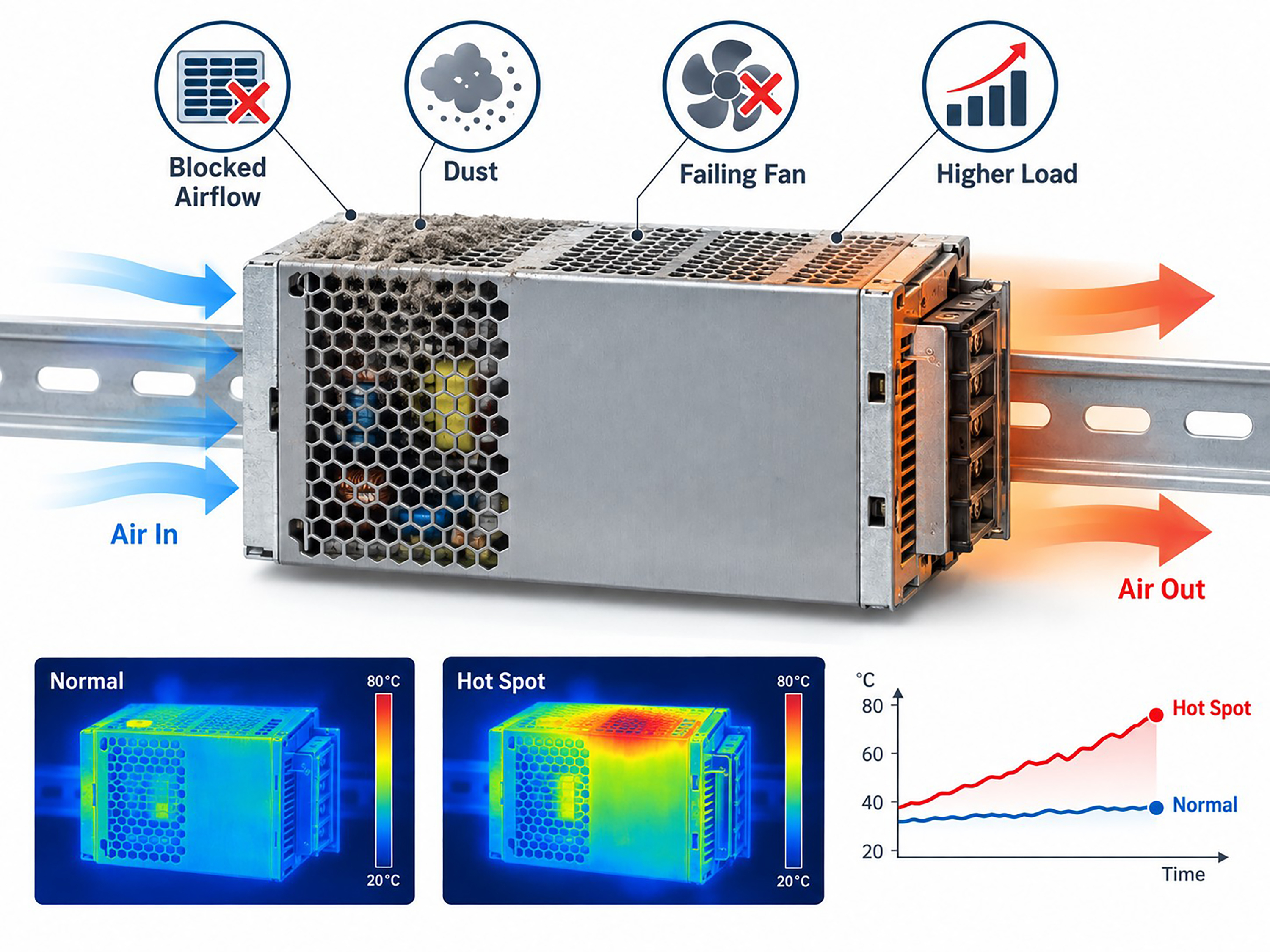
Figure 1 – Industrial PSU Thermal Warning Signs
A useful maintenance practice is to compare temperatures under similar machine loads. A PSU that operates noticeably hotter than it did several months earlier may deserve further inspection even if its output voltage is still within specification.
Load Growth Can Reduce Reliability Margin
Industrial systems rarely remain unchanged throughout their lifetime.
Additional sensors, I/O modules, communication devices, industrial PCs or auxiliary equipment may be added without reviewing the original power budget.
The PSU can therefore move gradually from moderate utilisation toward continuous high load.
This reduces the available margin for:
- Startup current
- Temporary overloads
- Higher ambient temperature
- Component ageing
- Future expansion
Maintenance teams should periodically compare actual current or power consumption with the PSU’s rated capability and the manufacturer’s derating limits.
A supply that was comfortably sized when the machine was commissioned may no longer have the same margin several years later.
Voltage and Fault Trends Can Reveal Developing Problems
A single output-voltage measurement provides only a snapshot.
Trend information is much more useful.
Where monitoring is available, engineers should watch for changes in:
- Output voltage
- Output current
- PSU temperature
- Fan speed
- Input voltage
- Warning or fault status
- Redundancy status
Repeated undervoltage warnings, temperature alarms or brief protection events should not simply be cleared and forgotten.
They can indicate increasing load, poor cooling, unstable input power or a developing PSU problem.
Modern digitally managed supplies may provide telemetry through interfaces such as PMBus, while simpler industrial PSUs may provide DC_OK, alarm contacts or status signals.
Even basic signals become valuable when maintenance teams record and trend them over time.

Figure 2 – Industrial Power Monitoring Dashboard
Connections Deserve Attention Too
Not every “power-supply failure” originates inside the PSU.
Loose terminals, oxidised contacts, damaged connectors and poorly terminated cables can increase resistance and create local heating.
At higher current, a small resistance increase can produce significant temperature rise.
Inspection should therefore include the complete power path:
AC input → PSU → distribution terminals → DC cabling → control equipment
Discolouration, damaged insulation, unusual connector temperature or repeated voltage drop under load can all indicate a connection problem.
Redundancy Creates a Maintenance Opportunity
Redundant power architectures can reduce downtime, but only if both power paths are healthy.
A common risk is that one redundant PSU fails silently or remains in a warning state while the system continues operating normally on the remaining unit.
The apparent redundancy has then disappeared.
Maintenance teams should periodically confirm:
- Both modules are online
- Current sharing is reasonable
- No persistent fault is present
- Both input feeds are available
- Hot-swap replacement works as intended
When redundancy is healthy, a deteriorating PSU can often be replaced during planned maintenance without shutting down the control system.
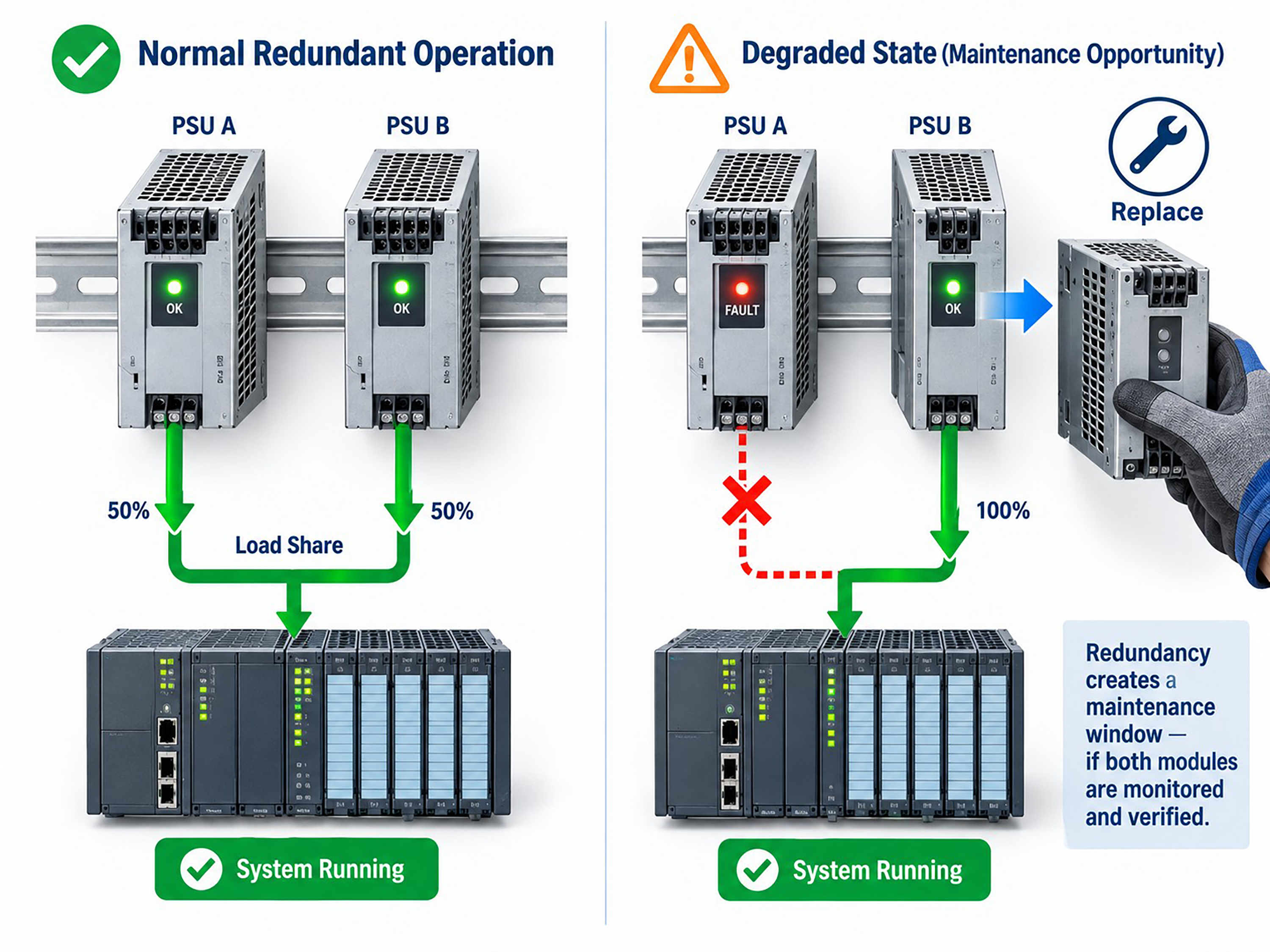
Figure 3 – Redundant Power Supply Maintenance Workflow
Move From Reactive Replacement to Condition-Based Maintenance
The goal is not to replace power supplies unnecessarily.
It is to combine simple indicators—temperature, load, voltage, alarms, airflow and connector condition—to identify units whose operating behaviour is changing.
A practical maintenance routine can include:
- Periodic thermal inspection
- Cleaning filters and airflow paths
- Recording PSU load
- Reviewing alarms and telemetry
- Checking redundant modules
- Inspecting high-current connections
- Planning replacement when multiple warning indicators appear
Power supplies are critical to every electronic control system, yet they are often ignored until a failure occurs.
By monitoring how a PSU behaves over time, maintenance teams can turn many power failures from unexpected production events into planned service activities.
Author Bio
Steven Zhang is Product Manager at Powernexu Technology Co Limited, focusing on server and industrial power supplies, redundant power architectures and power-system integration. His work covers power-delivery reliability, thermal performance and high-density computing and industrial control applications.
Company: Powernexu Technology Co Limited
Website: www.powernexu.com
Email: This email address is being protected from spambots. You need JavaScript enabled to view it.