Latest News

Engineering the Conversation: An Interview with Steve Morris on the Future of Maintenance and Reliability

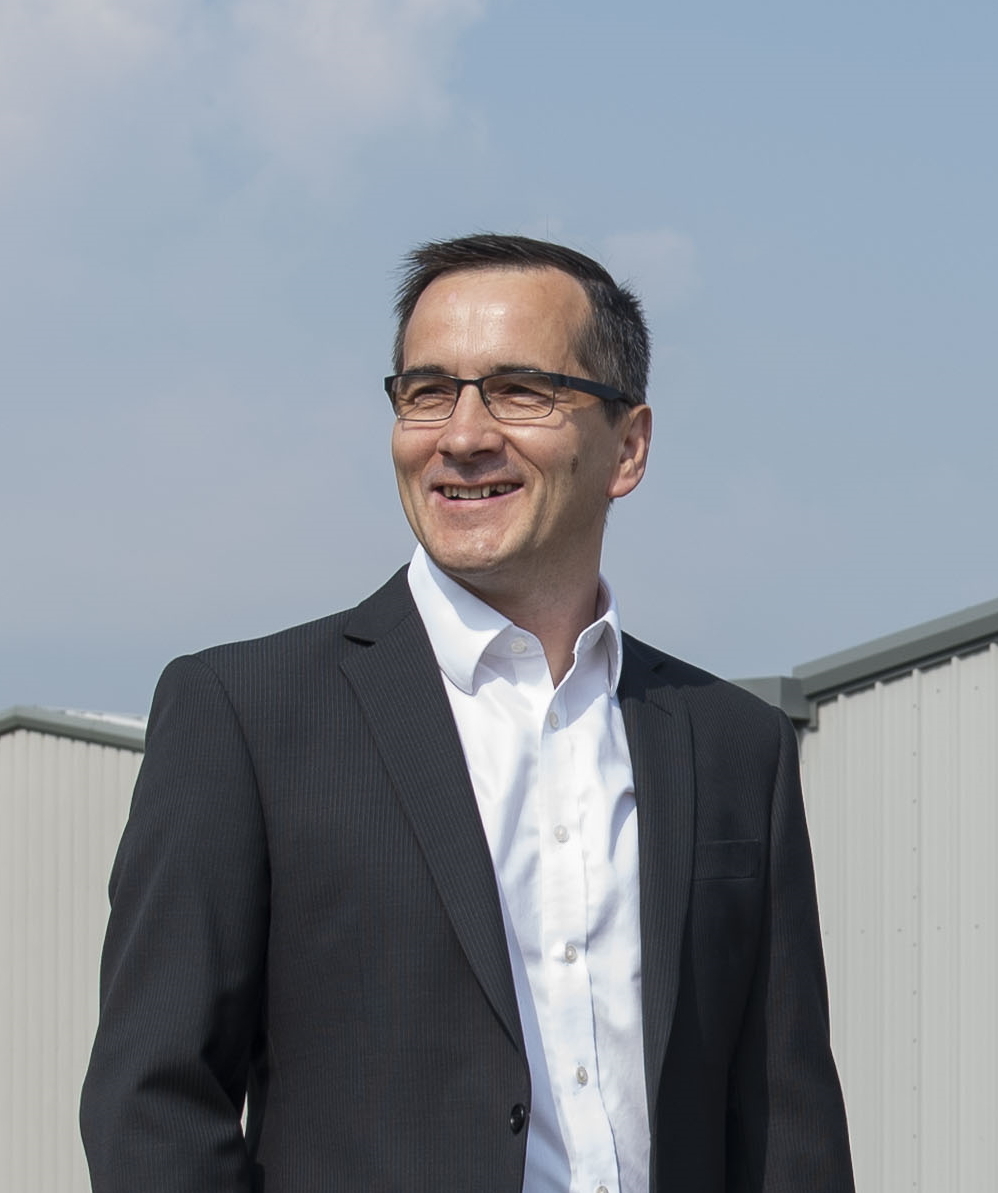
At London Bridge, we caught up with Steve Morris from Mainstream to discuss how the maintenance and reliability landscape is evolving, and why engineers themselves are increasingly shaping that future. Speaking candidly about his recent visits across the UK, Morris explained that one of the most striking aspects of today’s industrial environment is the diversity in maintenance maturity. “The UK is a fascinating mix,” he says. “You’ve got organisations that are really pushing the boundaries with AI, predictive maintenance and advanced asset management. At the same time, there are still operations that are largely reactive, without structured planning or preventative strategies in place.” For engineers responsible for maintaining critical assets, this contrast presents both a challenge and an opportunity. Morris believes that bridging this gap is one of the most important priorities for the industry. “There’s a huge opportunity to improve performance, safety and reliability simply by learning from what others are already doing well,” he explains. “And that’s where community becomes incredibly powerful.” At the heart of Mainstream’s approach is a philosophy that places engineers firmly at the centre of the conversation. Rather than dictating content from the top down, the organisation builds its conferences and research around direct input from maintenance and reliability professionals.

This “by the people, for the people” model ensures that the topics discussed are not only relevant, but grounded in real-world challenges. “We bring together heads of maintenance, reliability leaders and practitioners and ask them what matters most,” Morris says. “That insight shapes everything we do, from the research we produce to the content delivered at our events.” Recent think tank sessions in Birmingham and Manchester have played a key role in shaping the agenda for the upcoming Mainstream event later this year.

These sessions, which bring together industry leaders for open and honest discussion, provide valuable insight into the issues currently facing engineers across multiple sectors. One area highlighted during these discussions is the complexity of maintenance strategies within multi-site operations, particularly in sectors such as food manufacturing. Morris notes that many organisations in this space have grown through acquisition, resulting in significant variation in maintenance practices from site to site. “You might have one facility that is highly advanced, using condition monitoring and predictive techniques, while another site within the same group is still largely reactive,” he says. Aligning these approaches is becoming increasingly important as companies look to improve efficiency, reduce downtime and enhance safety. For maintenance engineers, this often means navigating not only technical challenges but also organisational and cultural differences.

Beyond the technical aspects, Morris is particularly passionate about the way knowledge is shared within the industry. He emphasises that while formal presentations and technical papers have their place, the most valuable learning often happens through direct interaction between engineers. “It’s not just about what happens on stage,” he explains. “Some of the most important insights come from conversations over a coffee, where people share their experiences and challenges in a more informal setting. That’s where real learning happens.” This focus on human-to-human interaction is a defining feature of Mainstream’s events, which are designed to encourage open dialogue and collaboration. By creating an environment where engineers feel comfortable sharing their knowledge, the organisation aims to accelerate the spread of best practice across the industry. Looking ahead to the upcoming Birmingham event in October, Morris is confident that it will build on the success of previous gatherings. With a strong emphasis on practitioner-led content and real-world case studies, the event promises to deliver valuable insights for maintenance and reliability professionals at all levels. For engineers working in asset management, maintenance and reliability, the message is clear. In an industry undergoing rapid change, staying connected and engaged with the wider community is more important than ever. As Morris concludes, “The answers are often already out there. It’s about bringing people together so they can learn from each other and move forward together.” For further information please visit:

www.mainstreamcommunity.com

Seth Ratner, CEO of East Hills Instruments, is literally driving his company toward success.

In an era dominated by emails, Zoom calls, and polished boardroom presentations, Ratner is taking a different road, literally. He’s stepping away from the Zoom calls and heading out onto the open road, meeting customers face-to-face the way business used to be done. Recently completing a 14-day tour across Texas in a fully equipped RV, Ratner brought his company directly to the front lines of the gas and oil industries.

This isn’t just a throwback to relationship driven sales, he has put a modern twist on it. He’s documenting the entire journey through a fast-growing reality series on YouTube called, “On Site and Off Grid.”

Mr. Ratner stated, “What started as a creative way to showcase a unique sales approach has quickly taken on a life of its own.” With hundreds of viewers tuning in daily, the audience extends far beyond the industry itself. The show has quietly evolved into a cult favorite online, offering an unfiltered look at the people, places, and challenges that keep critical infrastructure running every day while also revealing the real struggles and resilience of a small, family-owned manufacturing business.

At its core, the series shines a light on an often overlooked workforce. The men and women working in refineries, plants, and facilities across the country rarely get recognition. Ratner’s show puts a face to that world, humanizing an industry that most people never see, but everyone depends on.

This dual approach of combining boots-on-the-ground relationship building with digital storytelling is what makes the strategy so unique. While many companies chase clicks and impressions, East Hills Instruments is building something deeper: trust, visibility, and authenticity.

And it’s paying off.

Mr. Ratner says, “Customers aren’t just watching but they’re engaging.” Prospects who may have once been unreachable through traditional channels are now reaching out after seeing the show. Conversations are warmer. Doors are opening faster. The line between marketing and relationship-building has begun to blur in a way that feels both natural and powerful.

At the same time, the show reinforces what truly differentiates East Hills Instruments: its products and its people. The company’s Magnum Pro Calibration Pumps have earned a reputation for being virtually indestructible and capable of withstand the harsh environment they are used. Paired with the patented technology behind its Winchester Engineering auto-ranging digital gauge, the combination delivers precision, durability, and innovation in a way few competitors can match.

It’s this pairing of powerful, authentic marketing on one side and superior, battle-tested equipment on the other that sets the company apart.

Ratner’s got the winning combination.

There’s also an underlying message that’s hard to ignore. In a business climate where automation and digital outreach dominate, Ratner is proving that there’s still immense value in showing up. Shaking hands. Looking customers in the eye. Understanding their environment firsthand.

From boardrooms to back roads, this approach challenges conventional thinking. It suggests that the future of marketing may not be about choosing between digital or traditional—but blending both in a way that feels real.

And perhaps that’s why “On Site and Off Grid” is connecting so strongly.

Because beyond the RV, the road trips, and the sales calls, it’s not just a marketing campaign it’s a reminder that business, at its best, is still human.

CMMS RADIO ALL THINGS CMMS


Hart’s shutter delivers groundbreaking pressure resistance to extreme winds.

Hart’s Typhoon shutter is the product of the moment says Hart’s chairman Doug Hart. It delivers groundbreaking wind resistance in windy environments where the inherent weakness of relatively light weight wind class 5 roller shutters is not good enough.

Early examples of World-class, Hart installations are in Hong Kong for the airport terminal doors and data centres with access doors going up to 20 stories installed over the last few years. In the UK, current contracts in construction include the Highlands and Islands of Scotland where significantly enhanced shutter design is being used to secure building and their access.

Tested and third party verified to a level which is up to four times the BSEN Class 5 wind resistance requirements, the shutter is currently available up to eight metres in width.

Hart’s Typhoon roller shutter range has been tested in a vertical plane, as a fully operational door with door operation cycle testing after the specimen was fully load tested. Wind speed alone does not translate to the pressure applied to a door / surface. The real pressure evaluation must consider the density of the air that is applied to a door along with a number of other factors.

Reported wind speed is a generalisation and the actual pressure applied to a door or any surface could be a factor increase over reported wind speed. The actual pressure can be magnified by topography, whereby its funnelled between structures or hills, height above sea level and finally a sucking or negative component when other doors are opened within a building to name a few.

When considering the design the exposure at the actual location is crucial. A factor should be allowed to compensate for wind buffeting and material fatigue when specifying the pressure load. The only real way to cater for all eventualities is to build a unique software model taking all factors into consideration, however this can be an expensive approach so careful consideration of the location and design by wind experienced specialists can be the most practical solution when looking at existing buildings.

Roller shutters are a brilliantly convenient way to close off an opening securely while utilising the least additional space for operational requirements.

Last century roller doors were made from wood but now shutters are very advanced and are now available in steel, stainless steel, or aluminium insulated or non-insulated and prefinished to a required colour.

Full automation, linked to robotic and other mobile equipment, high speed performance, high security, fire control, the options are endless with greater efficiency and first-class safety and operational capability.

Experience and considered design has resulted in the development of the Hart’s Typhoon shutter.

www.hartdoors.com


NEW DEVELOPMENT: EXAIR Announces Brand Refresh and Commitment to Service and Innovation

EXAIR, a leader in engineering solutions, today announced the launch of a new brand identity as it enters its next chapter of growth. With this fresh approach, EXAIR has a clear perspective and a focus on what’s ahead. The commitment to forward momentum is backed by years of serving this industry and the promise to continue providing the best compressed air solutions on the market. The new look reflects the same innovation and attention to detail that have defined our approach to engineering and product design since our inception.

For 43 years, EXAIR has built its reputation on engineering excellence, product reliability, and long-term customer partnerships. The new identity reflects the company’s continued investment in innovation and forward-looking strategy, while reinforcing our foundation.

That commitment remains unchanged. The logo is new. EXAIR standards are not. The refreshed brand signals continued growth, expanded capabilities, and a long-term commitment to serving industrial customers with the same quality and responsiveness that built the company’s legacy.

            From Kirk Edwards, President of EXAIR: "I, for one, have been staring at the current EXAIR logo for 26 years – it represents where we came from and the hard work it took to get here. We have gained a lot of trust through performance, reliability, and our customer relationships under that logo. That trust earned will remain because it is, after all, the result of our people, customers, and commitment to doing things the right way. This brand refresh represents our strong and successful past while embracing new customer demands, emerging markets, and changing industries."

The refreshed brand identity aligns with EXAIR’s forward trajectory and commitment to engineering solutions that deliver measurable outcomes. Customers and partners can expect the same approachable expertise and dependable support that have defined EXAIR’s reputation, now paired with a visual and messaging framework that reflects momentum and innovation. EXAIR will begin implementing the new identity across digital platforms, marketing materials, and product packaging in the coming months and will debut the branding publicly at the upcoming Grainger Trade Show. For more information, visit EXAIR’s website or contact the applications engineering team for support and product guidance. https://exair.co/190-brand

Hart’s success with its range of doors

Writes Chris Dobson

 Working through a major developer which delivers high-profile infrastructure projects, Hart Door Systems has supplied 16 industrial doors, ranging from  Speedor Storms to insulated shutters for a major Waste Transfer Station.  

Hart’s chairman, Doug Hart says the scheme is billed as a step forward into a greener future and “we are delighted to be part of this significant project which demonstrates our broad range of industrial door products”.  

He adds: “Time and again clients tell us Speedor Storm is chosen because of its fast open and close operation. This in turn helps with environmental control and energy use reduction, essential for any major green project. Other Speedor Storm benefits include reliability and technologically advanced features which boost efficiency.”

Hart Door System’s wind-resistant, high-speed, industrial rolling door, Speedor Storm, is ready for business be it a factory, warehouse, storage facility or any kind of plant operation that has one or more large external openings which must be opened frequently for people and traffic.

With wind resistance available up to ‘wind class 5’, as defined by DIN EN 12424, in the closed position this high-speed door is ready for openings to a maximum 8 metres width or height subject to 48 square metres. This ability to withstand substantial wind pressure means major entrances open/close automatically so avoiding a less than optimal working environment and the escape of heated air.

Speedor Storm is designed specifically to help with several areas of business notably productivity, improving environment in which to work, delivering maintenance of temperature and environment by door preventing penetration by wind born debris.

Made at Hart’s Newcastle factory, from where its teams of engineers are available throughout the UK for installation and reliable servicing and maintenance thereafter.

The benefits of Speedor Storm come from its unique guide system in combination with other carefully designed features. Further Speedor Storm’s strength and wind resistance comes from its multi-layer PVC and textile, both long-lasting and tear-resistant and its inbuilt horizontal curtain braces and no external cumbersome and noisy external wind bars.

There is a colour choice as well as ‘a with or without vision panel ’ which combine to deliver a good appearance, operational effectiveness and a performance product.

Safety features include a state of the art safety light curtain, anti-fall protection and sensors to activate the door. There is a range of operating methods that include hands free, floor loops, radar, photo beam, radio operation, movement sensors, handheld or vehicle-mounted radio transmitters,  or simple push button and pull cords.

The automatic operation can be set to include or exclude pedestrians as desired. If warning lights or klaxons are required, these can be incorporated in a complete door system and control panel which are designed for any conceivable need including integration into a Building Management System if necessary. This is delivered via its unique guide system in combination with other carefully designed features.

Little wonder Speedor Storms are so highly regarded.

www.hartdoors.com

Silence, Power, Performance – Reimagining Industrial Cleanup with the Heavy Duty Dry Vac

Engineered for industrial power and quiet efficiency, the Heavy Duty Dry Vac™ System delivers fast, high‑volume dry material cleanup—moving more in less time than ordinary vacuums. Its expanded drum capacity reduces changeouts, keeping productivity high while its wear‑resistant, no‑motor design tackles abrasive materials like steel shot, garnet, metal chips, and sand with ease, yet remains versatile enough for everyday cleanup tasks.

            Powered entirely by compressed air, it mounts to any 30, 55, or 110‑gallon open‑top drum and operates at an impressively low 82 dBA, bringing powerful performance without the noise. A high‑efficiency filter bag captures fine dust to maintain clean air, and with no motors or impellers to clog or fail, reliability comes built‑in—reinforced by a five‑year warranty.

            Each system arrives ready to work, complete with a lever‑lock drum lid, shutoff valve, reusable filter bag, static‑resistant hose, hanger, compressed air hose with swivel fittings, pressure gauge, and heavy‑duty aluminum chip wand. Deluxe Systems add a drum dolly, robust tools, and a tool holder, while Premium Systems include a full 30, 55, or 110‑gallon drum for maximum convenience.

            EXAIR is offering a special right now on all their Industrial Housekeeping Vacuums. Learn more at https://exair.co/190-vacpromo

GROUP RHODES TO DEMONSTRATE FULL MANUFACTURING CAPABILITIES FOR COMPOSITE AND METALFORMING MACHINERY AT MACH 2026

group_mach.jpeg

Birmingham NEC, Hall 6 STAND 380, 20-24 APRIL

Group Rhodes, the world’s longest established manufacturer of metalforming machinery, will be demonstrating its extensive capabilities in the manufacture and servicing of composite and metal forming equipment at MACH 2026.

The company is highly experienced in manufacturing equipment for the production of light weight components.  This includes manufacturing Superplastic Forming (SPF) presses for the aerospace and defence sector used to produce component parts for light aero structures.

Mark Ridgway OBE, CEO of Group Rhodes, said: “MACH 2026 is a superb platform for us to demonstrate our extensive capabilities in the composite and metal forming industries.  Our experienced team will be discussing with manufacturers how we can help them to meet their equipment requirements, using our expertise gained from over 200 years in the metalforming industry.  We are also looking forward to discussing some of our latest innovations and how we can help companies to produce lighter weight products to meet their requirements.”

Group Rhodes will also be showcasing its comprehensive aftermarket service, for equipment including Rhodes, Atkin Automation, Fielding, Berry, Chester, John Shaw, HME, Bentley, Cowlishaw Walker, Kinghorn, Steco, plus other manufacturers’ equipment.

Alongside Group Rhodes, sister company Atkin Automation will be promoting its large portfolio of coil processing machinery, which includes a comprehensive range of Servo Roll Feeds.

The company is also working on releasing a new website in the Spring www.grouprhodes.co.uk.  The much-anticipated website will demonstrate all Group Rhodes’ latest projects, innovations and case studies, featuring its complete range of expertise in the manufacture of equipment for the metalforming and composites industries. 

Group Rhodes has a 200 year metalforming machinery history and has manufactured equipment for the forming of composite materials from as early as the 1930s. In addition, the group operates divisions in the heavy ceramics and material handling sectors and has won Queen’s Awards for both Innovation and International Trade in recent years.

The company’s composite machinery is used to produce structural components for production road cars as well as flight critical components for a variety of aircraft. The company also offers a wide range of hot and cold forming technologies for specialist metalforming applications across several industrial sectors.

All Group Rhodes’ machinery is supported by a comprehensive aftermarket spares and service team which maintains the company’s equipment throughout the world.

Atkin Automation, part of Group Rhodes, is a leading manufacturer of material handling equipment for the metalforming market. The company, originally known as WT Atkin, is renowned for the high quality of its coil processing line equipment and has a long history of serving both UK and international markets in sectors as diverse as automotive, white goods and construction.

Closing the Skills Gap: How AI and Diversity Will Transform Maintenance Engineering

By Candi Robison, Ultimo

The maintenance engineering sector faces twin challenges that threaten operational reliability: an accelerating skills shortage as experienced technicians retire, and the persistent underutilisation of available talent. While 63 percent of organisations identify workforce aging as their most critical trend and 50 percent report major disruption from recruitment challenges, women represent only 7.6 percent of manufacturing maintenance technicians.

This isn't merely an equality issue; it's a strategic vulnerability. In an industry where unplanned downtime costs UK manufacturing alone billions annually, leaving qualified talent untapped is an operational risk that organisations cannot afford.

The Business Case for Workforce Diversity

Data from Ultimo's Maintenance Trend Report reveals the urgency. Across manufacturing, utilities, and facilities management, maintenance departments struggle to fill critical positions. Yet the sector continues to overlook a substantial talent pool. Research from organisations like Women in Reliability and Asset Management (WIRAM) demonstrates that technical capability has never been the constraint - access to training, visibility of career pathways, and workplace culture have been.

WIRAM brings together professionals who've entered maintenance through diverse routes: technicians who began on the shop floor, engineers transitioning from related disciplines, and specialists in reliability engineering and energy systems. Their presence proves that maintenance expertise can be developed through multiple pathways, and that technical excellence isn't correlated with traditional demographic patterns.

AI as a Knowledge Multiplier

The introduction of agentic AI systems into maintenance operations creates unprecedented opportunities, and risks. These systems function as digital coworkers, learning from daily interactions, capturing decision-making processes, and building institutional memory that persists beyond individual tenure.

For maintenance departments, AI can preserve tacit knowledge: the vibration patterns that signal imminent bearing failure, the thermal signatures that precede motor burnout, and the troubleshooting sequences that come only through years of hands-on experience. This capability addresses one of maintenance's most pressing challenges - the loss of expertise as senior technicians retire.

Properly implemented, AI systems can accelerate junior technician development, reduce administrative burden through automated documentation, and make expertise accessible across shifts and sites. Condition monitoring data becomes more actionable when paired with AI that recognises patterns trained from experienced practitioners.

The Training Data Challenge

Here lies the critical juncture: AI systems learn from the workforce they observe. If maintenance teams remain overwhelmingly homogeneous whilst these systems are being trained, the resulting AI will encode a limited perspective on problem-solving approaches, communication patterns, and definitions of expertise.

This isn't theoretical. Bias in AI systems has been well-documented across industries when training inputs lack diversity. Maintenance engineering can avoid this outcome, but only through intentional action during the current implementation window.

Practical Steps for Maintenance Organisations

First, recruitment and retention of women in maintenance roles must become a measurable business objective. This requires modernising job specifications, expanding sourcing beyond traditional channels, ensuring equitable access to shift patterns and advancement opportunities, and establishing team environments where professional respect is non-negotiable.

Second, organisations should strengthen technical education pathways. Partnerships with colleges, apprenticeship programmes, and STEM initiatives can make maintenance engineering visible as a career option earlier -particularly to young women who may never have been encouraged to consider the field.

Third, AI implementation must include deliberate knowledge capture design. Whose work orders become training examples? Which technicians are interviewed for system development? Who validates AI recommendations before deployment? Diverse technical teams should inform every stage, as system quality depends directly on the breadth of expertise it learns from.

Finally, women currently working in maintenance roles should be recognised as subject matter experts whose knowledge will shape both the next generation of technicians and the digital tools supporting them. Their expertise should inform CMMS configurations, preventive maintenance schedules, and reliability improvement programmes.

The Implementation Window

AI systems are being trained now, learning from today's maintenance practices and today's workforce. Organisations that broaden participation immediately will develop more robust systems - systems that reflect the full spectrum of technical expertise and make maintenance careers more accessible for all qualified candidates.

The maintenance professionals needed to meet future reliability challenges already exist. Many are women prepared to contribute technical skill, operational insight, and innovation. Pairing this talent with intentional AI deployment doesn't merely address a staffing problem, it strengthens the technical foundation of maintenance engineering itself.

For maintenance organisations facing both skills shortages and digital transformation, the path forward is clear: invest in diverse technical teams whilst AI systems are learning. The result will be more capable systems, more resilient operations, and a stronger pipeline of maintenance expertise for decades to come.

www.ultimo.com


This website is owned and operated by: MSL Media Limited

msl logo
www.mslmedialtd.com

Co. Number: 05359182

© 2005 MSL Media Ltd. All rights reserved. E&OE

ems logo mobile