
Drones – the new visual frontier for predictive maintenance

sony.jpeg

When dealing with large-scale physical infrastructure, maintenance isn’t just a formality, it’s a necessity. The challenge? Minimising downtime and spotting problems early to avoid damage.

Though they play a crucial role in ensuring safety, traditional maintenance processes are often reactive, expensive and time-consuming. For instance, structures and assets that require routine preventative inspection can be difficult or hazardous to reach, exposing technicians to a degree of risk of falling and injury.

But as we enter the era of ‘the eye in the sky’, high-resolution camera-equipped drones are becoming more accessible, transforming the way the maintenance industry handles routine inspections.

High speed, low cost: Soaring toward a new maintenance era

Lightweight, remote-controlled, airborne devices open up a world of opportunities for predictive maintenance. Drone-mounted, or integrated cameras provide the visual data that allows technicians to assess large, difficult-to-reach structures quickly and safely. This technology can be used on anything from bridges and tall buildings to wind farms and beyond, allowing technicians to nip issues in the bud before they snowball.

Without drones, organisations often rely on manual inspections, which are prone to human error and require a long list of resources — technicians, cherry pickers, scaffolding and large-scale machinery, to name a few. That’s where drone imagery has enabled a paradigm shift from reactive to efficient predictive maintenance, reducing costs and supporting safety in the long run.

With the ability to zoom into the small details and pull back to observe the bigger picture, inspectors can capture minor structural defects in HD while gaining a comprehensive overview of structures. Electricity grids are a key example of complex maintenance significantly simplified by drone technology. Consider Pedernales Electric Cooperative’s power-line inspections. With the assistance of drones, each pole was fully inspected within 10 seconds, smashing the 15 minutes it took for a lineman to examine. Not only did this approach boost overall time efficiency by an astounding 88%, but it was also 80% cheaper to run, with less CO2 output, reduced risk of downtime and a 97% return on investment for the first year.

Since then, drone camera quality has skyrocketed, as exemplified by HHLA Sky’s critical crane safety inspections. The sheer scale of cranes typically distorts radio signals during inspection, requiring images to be captured from a minimum distance of 15 meters. In such cases, high-resolution camera quality is crucial for collecting accurate data. With Sony cameras, the maintenance team could cover a larger area with a single image, detect even the smallest scratches, and complete their inspections with fewer shots. As such, it’s clear that a new standard for time efficiency and cost-effectiveness has been set for maintenance operations.

Beyond the human eye: The power of drone data

Technicians can only address what they’re able to see. In routine maintenance checks, it can be easy to miss smaller issues, such as leaks or installation faults. But these undetected problems can cause serious damage. While drone cameras are ideal for providing a wide range of data without compromising on quality, they can do much more than magnify visual data. Captured images can merge together to form detailed 3D models of structures and assets. Aerial photogrammetry is a fantastic way to achieve this.

In a nutshell, aerial photogrammetry is the process of stitching together a cascade of images captured from an airborne device. These pictures comprehensively cover all sides of the target object. Then with this data, technicians can obtain a drone-captured 3D replica of the structure or asset, allowing them to get insights that surpass what’s possible with manual maintenance. The outcome? Precise defect detection and effective progress monitoring.

Furthermore, drone imagery can be used in conjunction with other tech, such as thermal imaging sensors, which highlight temperature anomalies to uncover issues such as condensation, dampness and water ingress. And of course, we couldn’t have this conversation without mentioning the integration of AI.

Let’s explore how drones can push the boundaries of efficiency even further.

Marrying drone-captured imagery with ML and AI

AI and machine learning (ML) are complete game changers when it comes to drone-captured imagery. With AI, drones can identify and flag minuscule details such as cracks, chips and general wear and tear. They’re also able to adapt their navigation paths to avoid collision, which is integral for keeping the hardware intact when observing confined spaces.

How is this possible? Using data from images, flight logs and 3D models, AI can be ‘aware’ of its surroundings and spot patterns and anomalies taught through ML – an ongoing training process that allows the AI model to continuously enhance its ability to recognise and interpret data. These advanced AI/ML algorithms support proactive maintenance by facilitating data-driven decisions, reducing the likelihood of unnoticed faults and increasing the overall reliability of the drone fleet.

Not only are AI/ML-enhanced drones great at sleuthing out issues early on, but they’re also impressively scalable. AI-based systems can process vast volumes of data from multiple drones and sites, giving technicians the freedom to conduct and complete multiple inspections of varied project scopes within a remarkably short time frame. This time efficiency translates to cost savings, reduced labour and minimised disruption. Drones can be employed for a diverse range of projects, from small plots of land to vast landscapes.

Flying high with drone-enhanced maintenance

The shift from reactive maintenance to predictive maintenance marks a momentous change, driving a more proactive and reliable approach to maintenance strategies. And drone capture technology is only getting more advanced, with cameras like the ILX-LR1 offering exceptional imaging capabilities and enabling custom applications for specialised tasks. Designed specifically for drone payloads, this camera comes with an SDK that’s compatible with Linux, Windows, and MacOS, giving programmers a comprehensive software library to control the camera, API specification, and demonstration code.

With AI thrown into the mix, the outlook for drone-based image capture is becoming even more promising. This synergy not only enhances the precision and efficiency of operations, but also sets the stage for a smarter, safer and more cost-effective future in maintenance.

Article written By Matthew Swinney, Head of Image Sensing Solutions at Sony Europe 
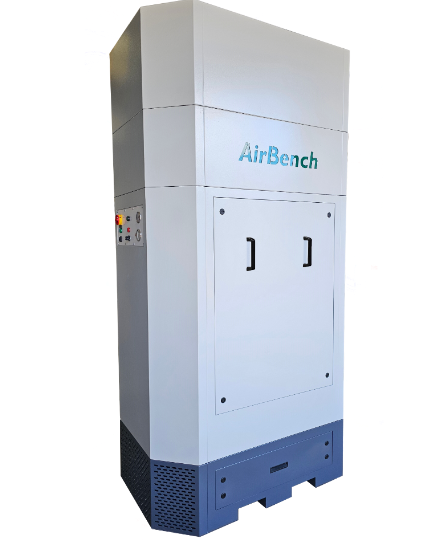
 

Are you suffering from high background dust or fume levels?

AirTower AT is designed to clean ambient factory air, removing the remaining pollutants that existing extraction is failing to capture.Full hall extraction assists extraction systems, removing coolant mist, smoke, and weld fume from the workplace.Designed to extract at high level, where weld fume and atmospheric pollution settles; returning clean air to the working space at low level to create a healthier working environment.AirTower from AirBench uses high power, energy efficient EC fans alongside a filter system selected to suit your application, to clean high volumes of air.Alongside our dust, fume, and mist extraction systems, the new AirTower AT helps you create the right working environment.

snip.jpeg

Contact us to arrange a site survey.

www.airbench.com


Balancing – why is it needed and how is it done.

TPI_JUNE.jpeg

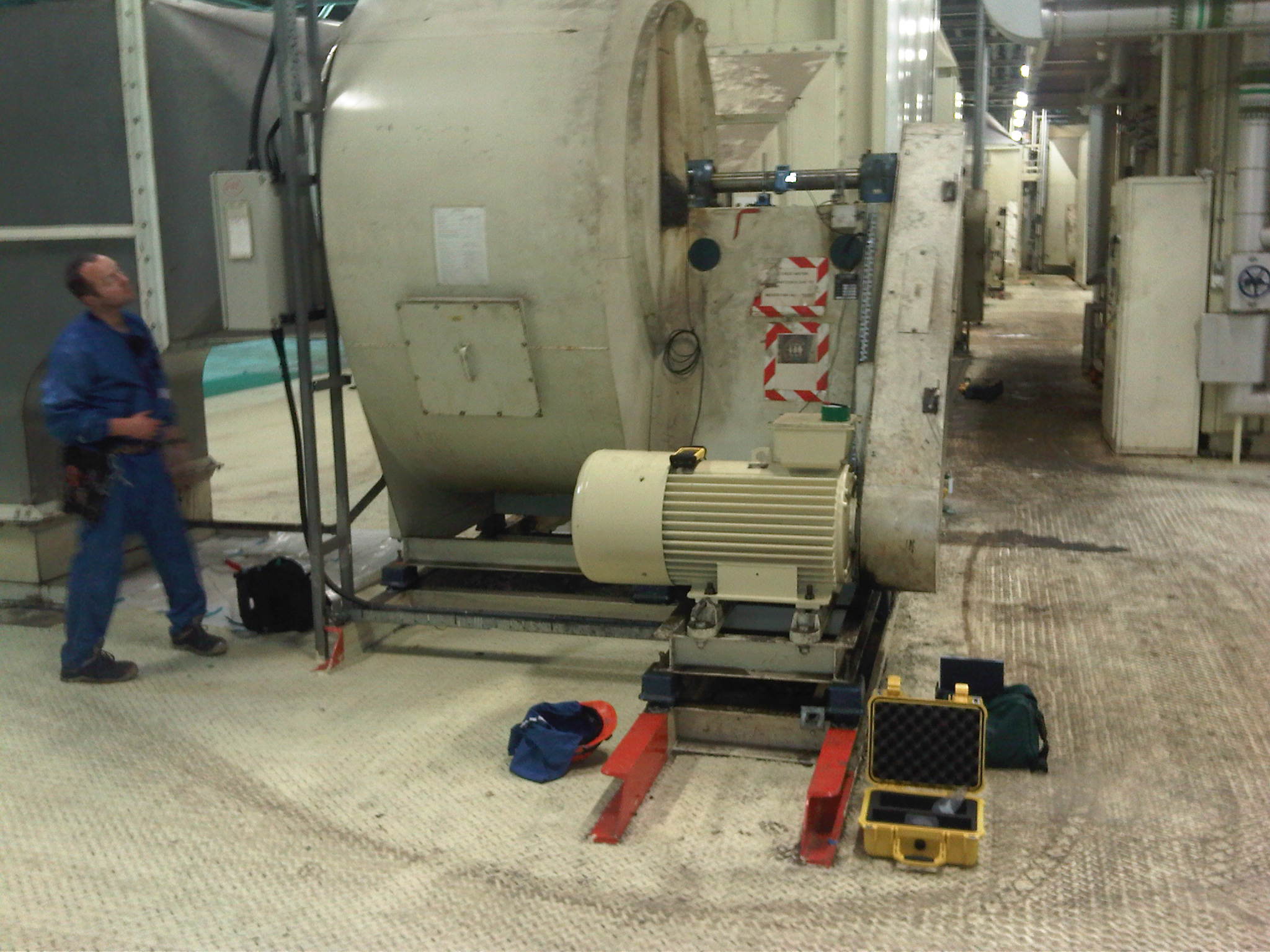
We all know what happens to a spin drier with unevenly distributed washing (i.e. an unbalanced load). It will vibrate, which often results in the spin drier jumping all over the place! Let’s think about that for a minute. To bounce around a 70kg washing machine requires quite a bit of effort (i.e. force) and all that force has to go through the bearings!  They’re not going to like it!

Imagine the situation where the machine is running 24/7, as with an exhaust fan or a continuous process pump for example. It won’t take long before you’re replacing those bearings! But it’s even worse than you think. To bounce around that unbalanced washing machine also requires a lot of energy, in other words it requires more electricity. So, by running machines even slightly out of balance, not only are you unnecessarily wearing out your bearings faster, you are also paying extra for the privilege!

But how do you know when a machine is unbalanced? Well, in theory a perfectly balanced machine would not vibrate. But in practice there is no such thing, so all machines vibrate. The more unbalance, the more vibration and bearing damage. Fortunately, the International Standards Organisation (ISO) has drawn up a set of guidelines for acceptable levels of machine vibration. Modern low-cost vibration analysers like the TPI 9070 (pictured) are available, pre-programmed with the ISO levels, to give a traffic light system of colour coded vibration readings. Basically, if it’s in the red it needs balancing!

There are two techniques commonly employed in balancing. The no-phase balancing technique (a.k.a. the 4-run method) allows you to approximately balance a machine by using a series of four runs, three of them with a trial weight attached to the rotor. By positioning the trial weight around the rotor’s circumference in 120 degree increments and measuring the resulting vibration, the balancer automatically calculates the location and magnitude of the “heavy spot” around the 360 degrees of the rotor‘s circumference. It also then calculates what weight, and at what position, will re-balance the motor, pump or fan. This is then done either by adding the weight to the rotor at a position opposite the heavy spot or easier still, by drilling holes to remove the equivalent weight at the heavy spot.

The 4-run method works well enough for cases where an approximated balance is all that is required. However, for larger machines that require more precise balancing or for dual-plane balancing (e.g. for longer rotors that need to be simultaneously balanced at both ends) we generally require more precise measurement of the unbalance. This is done by providing a reference position on the rotor’s circumference, known as a “key-phasor” input. Often this can easily be obtained from the machine’s tacho signal or alternatively, simply by affixing a piece of reflective tape to the rotor and using a low-cost laser tacho to give a reference pulse, once per revolution. This reference pulse is then used by the balancing software to accurately determine the location of the “heavy spot” around the 360 degrees of rotor circumference and calculate precisely how to counterbalance it.

It doesn’t take very much to unbalance a machine, e.g. dirt build-up on fan blades or a chipped pump impeller. Thankfully, it also doesn’t take much to re-balance it either, provided you have the right instrument. These days that’s not a problem, as simple to use, low-cost field balancers are now available that take you through the process on an easily followed step-by-step basis. For example, TPI’s Ultra III vibration analyser is now available with both built-in no-phase and single/dual plane key-phasor balancing. For the latter, the included laser tacho (TPI 505L) can be used by the Ultra III to calculate precisely what is required to re-balance the motor, pump or fan.

For more information, please contact TPI Europe on +44 1293 530196 or www.tpieurope.com or email This email address is being protected from spambots. You need JavaScript enabled to view it.

See the Sound: CRY8120 Series Acoustic Imaging Camera Revolutionizes Industrial Inspections.

crysound_edit.jpeg

A New Era of Inspection Technology

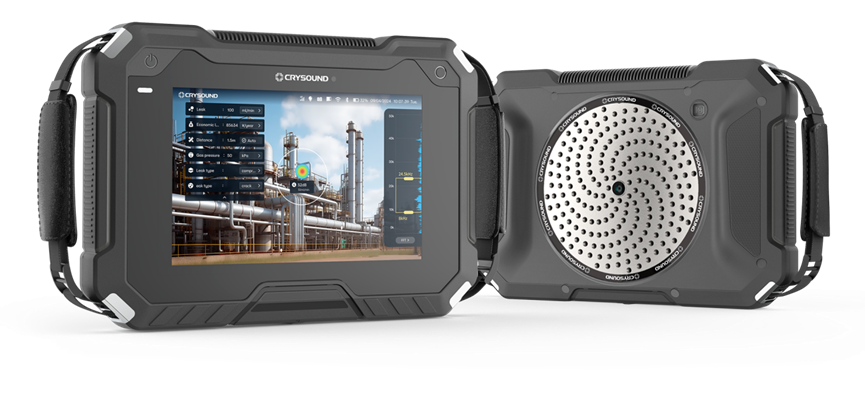
Introducing CRYSOUND's cutting-edge acoustic imaging cameras, revolutionizing industrial inspections with advanced capabilities. The CRY8120 Acoustic Imaging Camera excels at pinpointing leaks, identifying electrical partial discharge, and detecting mechanical deterioration, performing over 10 times faster than traditional methods. In gas leak detection, the acoustic imaging camera can quickly pinpoint the location of gas leaks and estimate leakage volume and economic losses in real time. In partial discharge detection, the acoustic imaging camera can display PRPD charts in real time and identify discharge types to assist in further decision-making.

By providing clear and immediate assessments of leak volumes and potential economic losses, CRY8120 series Acoustic Imaging Cameras enable companies to make informed decisions, saving time and resources. Enhance your industrial inspection capabilities with the CRYSOUND acoustic imaging camera. Don't just meet today's standards—set the benchmark for tomorrow. Invest in a safer, faster, and more efficient industrial operation for the future!

Outstanding Performance Features

The CRY8120 series revolutionizes industrial safety with its cutting-edge technology and outstanding performance features. Its powerful capabilities include:

  • Ability to detect gas leaks and partial discharges, significantly enhancing industrial safety
  • 200 MEMS microphones enable long-distance testing, ideal for large industrial environments
  • 13 million pixels and 6x digital zoom for high detail capture
  • Simultaneous thermal and acoustic imaging for efficient testing and comprehensive diagnostics
  • 4X analog input
  • 8-inch display with 1920 × 1200 resolution for accurate field rendering
  • 600 nits display brightness for clear visibility in sunlight
  • Bluetooth and Wi-Fi for wireless data and quick report export
  • GPS functionality to manage geotagged photos and locate records on asset map
  • Use for 5+ hours, with a removable battery for all-day

Experience extraordinary performance in a lightweight 1.4kg device, delivering less weight and more powerful features for an unmatched user experience.

Powerful Report Analysis Software

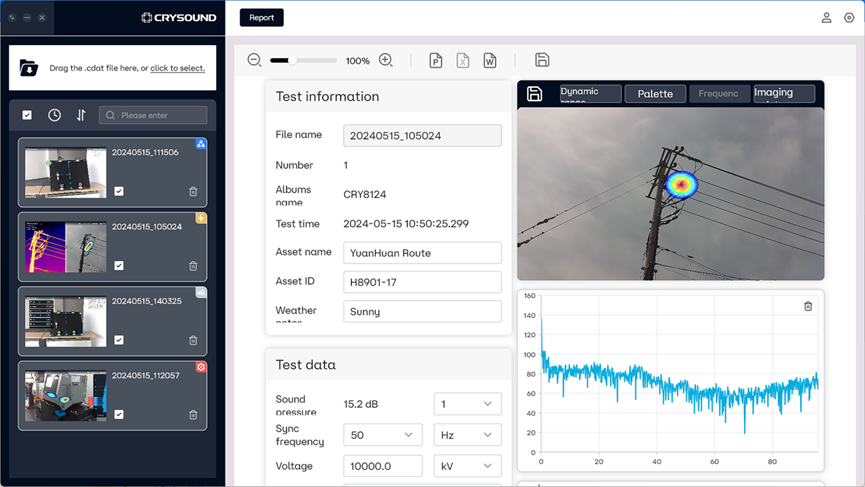
Data can be imported from the Acoustic Imaging Camera via Wi-Fi. The report software provides real-time preview and editing capabilities, allowing users to view results immediately during the process of editing reports and ensuring consistency with the final exported report. The report software also supports offline re-editing of parameters of acoustic images, such as dynamic range and frequency. With this feature, users can conduct in-depth analysis of acoustic images in the office, identifying and analyzing potential issues or anomalies. Additionally, it can simultaneously generate reports for acoustic and thermal images.

crysound2.jpeg

CRYSOUND: The Ultimate Solution for Your Industrial Inspection Needs

Elevate your industrial inspection capabilities to new heights with the ultimate CRY8120 series Acoustic Imaging Camera. Combining cutting-edge technology with unparalleled ease of use, this camera guarantees workplace safety while boosting operational efficiency.

Now is the time to invest in precision and reliability, enhancing your maintenance strategies and safeguarding your assets. With CRYSOUND, you're not just buying a product; you're making a commitment to the future of safer, faster, and more efficient industrial operations.

www.crysound.com


How to Repair and Protect Hydro Equipment with Polymeric Technology

Given the expected and necessary growth of the hydropower industry over the upcoming decades, it could be argued that polymeric technology has a valuable role to play in supporting this growth. Applications, such as the one identified below, demonstrate how assets that would otherwise be decommissioned or sent to landfill can be given a new lease of life thanks to a combination of epoxy repair composites.

216.jpeg

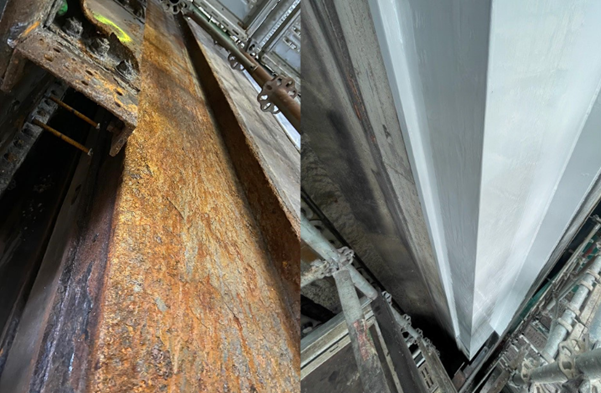
Figure 1. Polymeric technology supports seismic growth of hydropower industry
 

Hydropower Capacity Set to Double by 2050

According to the International Energy Association’s (IEA) ‘Net Zero by 2050’ Roadmap (revised version 2021), the hydropower industry needs to be the ‘third largest energy source in the electricity mix by 2050.’ – this involves a doubling of hydropower capacity by this date. This is in order to keep the planet aligned with a net zero by 2050 pathway.

To support this colossal scale-up of hydropower capacity, polymeric technology has an important part to play in terms of its role within hydropower plant maintenance. In order to keep a growing fleet of hydro plants running as efficiently as possible, systems such as epoxy repair composites and high-performance coatings can be deployed to repair and protect damaged assets.

Not only does this technology enable asset owners to make significant financial savings, but this circular economic business model is also extremely beneficial for the planet. It mitigates the carbon footprint that would otherwise be incurred through the process of replacing a damaged asset and sending it to landfill. In turn, by helping asset owners to avoid asset replacement, it could be argued that polymeric technology has an important part to play in supporting the transition to net zero by 2050.

217.jpeg

Figure 2. Polymeric technology prolongs the lifespan of hydro equipment

Rebuilding Sealing Faces of Hydro Equipment

A common application area where polymeric technology can be deployed in hydropower plants is dam or lock gates. These gates are highly susceptible to substantial erosion at their sealing surfaces. Factors such as pressure, water flow and consistent friction contribute to compromised seals over time. Over the years, authorised Belzona Distributor, Protecmo, has conducted a series of applications designed to repair and protect the sealing faces of hydro equipment for the long term.

For rebuilding the damaged substrate, Protecmo specify the 2-part epoxy paste, Belzona 1111 (Super Metal). As this system is specially designed for metal repair and resurfacing, it is perfectly optimised to rebuild damaged metal substrates in dam or lock gates. A solvent-free epoxy resin reinforced with silicon steel alloy, this composite repair material is corrosion-resistant, and also resists a wide range of chemicals. Thanks to its cold-curing properties, this successfully mitigates the need for hot work. The ceramic polymer, Belzona 1311 (Ceramic R-Metal), is also specified for metal rebuilding, but for situations where additional erosion resistance is required.                      

In order to provide long-term protection to the lock gates, Protecmo specifies the metal repair composite, Belzona 1321 (Ceramic S-Metal). This system provides excellent corrosion-erosion resistance for applications up to 60°C (140°F). This solvent-free epoxy coating also has outstanding chemical resistance and will bond to almost any rigid surface. Belzona 1331 is also used to protect assets against

the effects of corrosion-erosion for temperatures up to 50°C (122°F). In addition, as Belzona 1331 can be spray applied, this makes it a practical choice for larger applications.  

218.jpeg

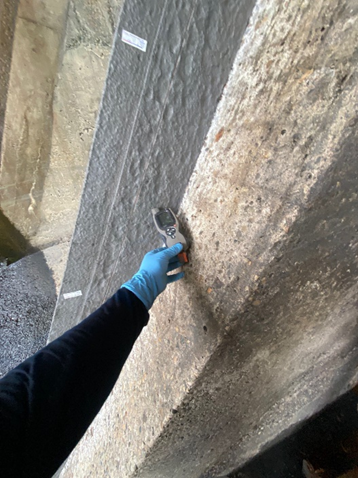
Figure 3. Rugosity and temperature check after surface preparation
219.jpeg
 
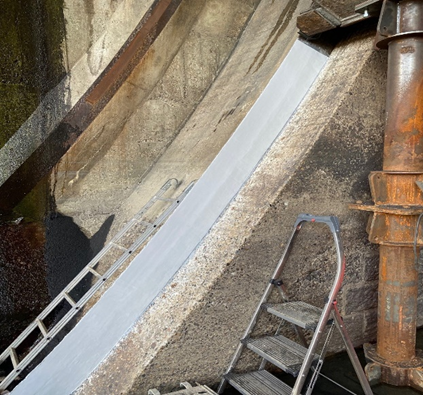
Figure 4. Lock gate repaired and protected with combination of epoxy pastes

Polymeric Technology Supports the Transition to Net Zero

Considering the expected growth of the hydropower industry, it is critical that vital assets are safeguarded against damage and degradation for the long term. Polymeric technology has an important role to play in facilitating this. By repairing and protecting a damaged asset instead of replacing it, epoxy repair composites and high-performance coatings are key drivers in supporting the transition to net zero.
 
Please click on the following link for more information about Protecmo.  

bNovate Technologies and MattenPlant sign groundbreaking distribution agreement to enhance water safety across Asia

new.jpeg

In a landmark move set to revolutionise water safety across Asia, Switzerland’s bNovate Technologies SA, which provides rapid monitoring and analysis of water, sealed its very first partnership in Asia, appointing Singapore’s MattenPlant as its official Asian distributor.

This significant collaboration was cemented during the Singapore International Water Week. bNovate CEO Serge Gander and MattenPlant CEO Victor Lim joined forces to bring cutting-edge, automated solutions for industrial microbiology to new markets, especially in the food and beverage sectors in the Philippines and Vietnam.

“We are thrilled to partner with MattenPlant,” said Serge Gander, CEO of bNovate. “Their expertise in integrating water technologies and their strong presence in Asia align perfectly with our global ambition of making water safer with our automated and digital monitoring solutions. This agreement marks a significant milestone for bNovate, enabling us to reach new markets and better serve our customers.”

Using state-of-the-art flow cytometry technology, bNovate’s BactoSense instrument measures cell concentrations in just 20 minutes, proactively addressing abnormalities and deviations from baseline microbial profiles. This technology ensures swift, accurate, waterborne microbe detection, safeguarding public health and industry standards.

Victor Lim, CEO of MattenPlant, shared his enthusiasm: “We are very impressed with what bNovate brings to the market in their range of monitoring equipment. This is an exciting opportunity for our companies to work together and bring highly effective water safety solutions to our customers, particularly in the food and beverage industry. We will leverage our local presence to provide training, service and pilot testing. This is to enhance customer’s engagement and experience of BactoSense”

Asia faces significant water challenges in many regions, including contamination from industrial and agricultural activities, rapid urbanisation and inadequate water infrastructure. The partnership with MattenPlant addresses these critical issues by introducing advanced Swiss water monitoring technologies that provide real-time, precise data, enabling proactive management and remediation. By leveraging bNovate’s innovative solutions, communities and industries across Asia can achieve safer, cleaner water, ultimately enhancing public health and supporting sustainable development. This collaboration represents a pivotal step in transforming regional water safety standards, ensuring that every drop meets the highest quality standard.

For more information about MattenPlant and bNovate Technologies, please visit their websites at www.mattenplant.com and www.bnovate.com.


New Landia pumps continue to provide long-term solutions for the water industry

landia_june_1.jpeg

Landia has won a series of new orders in the municipal wastewater industry, including the supply of 16 Axial pumps to a wastewater treatment plant in Ireland.

Specified in acid-proof stainless-steel to protect against corrosion in a coastal environment, the 16 Landia pumps were chosen for their capability in a demanding high-volume, low-pressure application.

Landia has also gained an order with Scottish Water to provide four new pumps for one of the water company’s main facilities that produces biogas from sludge. The pumps are part of a very successful digester mixing system, which has no moving parts inside the tank, so maintenance is made much easier, with no costly emptying of the vessel required.

In addition, in the north of England, Landia has won an order for its acclaimed chopper pumps at a sewage treatment facility that was having problems with its existing units (made by a different manufacturer) that were continually blocking.

Paul Davies, Landia’s Key Account Manager commented:

“For performance, and importantly, total cost of ownership, we are pleased to see more water companies and contractors identifying the many benefits of our pumps and mixers. They really do get stuck in with difficult, hard-to-handle applications, where solids can cause major headaches for less robust equipment.”

www.landia.co.uk


Belzona Supports OEMs with High-Performance Coatings

Introduction:

Traditionally known for its high performance repair and maintenance solutions, Belzona is expanding its reach into the Original Equipment Manufacturer (OEM) market.

With an extensive range of coatings, Belzona can provide cost-effective alternatives for protecting and finishing OEM equipment such as pumps, tanks and heat exchangers.

bel_june.jpeg

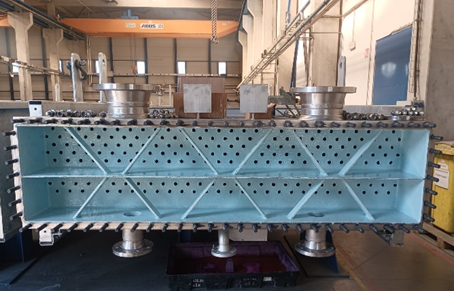
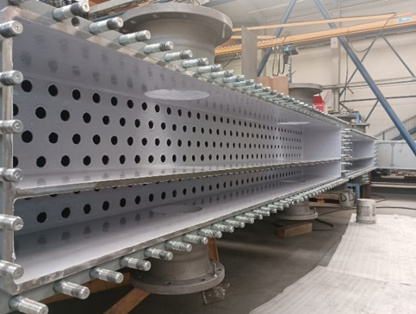
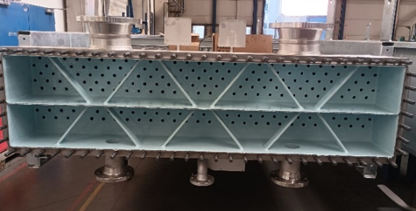
One of 14 OEM Heat Exchangers coated with Belzona

Rather than waiting until the damage is done, a large Manufacturer of heat exchangers in the Czech Republic specified the use of Belzona to enhance the durability and performance of their newly manufactured equipment. The Customer reached out to Belzona Authorised Distributor, STROJCONSULT Litvínov s.r.o. for a solution.

Why Chose a Belzona Coating?
After learning about the benefits of Belzona 1593, the Company decided to coat all 14 newly fabricated heat exchangers to prevent corrosion and prolong the equipment's lifespan.

Each heat exchanger was lined with two coats of Belzona 1593, a high temperature brush-applied epoxy coating which provides corrosion protection for equipment operating under continuous immersion conditions. The team at Stroj Consult not only supplied the Belzona solution but also provided an expert team of applicators to complete the lining. The application was completed over a 14-day period offering the customer a comprehensive turn-key service.

belj2.jpeg

This solution is intended to extend the service life of the heat exchangers, ensure reliability of the equipment in demanding environments and provide cost savings in terms of downtime and maintenance.   

belj3.jpeg

Key Features of Belzona 1593:

belj4.jpeg

Belzona 1593 provides outstanding corrosion protection for high-temperature equipment. This feature was crucial in addressing the Customer's concerns about the longevity and effectiveness of their heat exchangers.

The coating is suitable for continuous immersion in water and hydrocarbon mixtures at temperatures up to 160°C (320°F). This capability makes it an 

ideal solution for environments where temperature stability is paramount.

Belzona 1593 exhibits excellent chemical resistance against a wide range of chemicals, including hydrocarbons and amines. This resistance ensures the integrity of the heat exchangers even in aggressive chemical environments, providing the Customer with a robust and long-lasting solution.

Belzona's OEM Capabilities

By applying Belzona during the manufacturing stage, OEMs can offer their customers enhanced reliability and performance from the outset.

The recent successful application of Belzona highlights the adaptability and superior performance of Belzona solutions, marking a new era for Belzona in preventative maintenance and OEM partnerships. It also opens doors for further collaboration with OEMs across various industries, demonstrating that Belzona's high-performance coatings are not only ideal for repairs but also as integral components of new equipment.

Interested in purchasing Belzona’s repair composites and protective coatings?

About STROJCONSULT Litvínov s.r.o.:


STROJCONSULT has a longstanding association with Belzona and is now the exclusive Distributor for Belzona products in the Czech Republic. Serving a diverse range of industries, including power generation, wastewater management, steel mills, and petrochemical plants, STROJCONSULT offers advanced epoxy repair composites and high-performance coatings to address various maintenance challenges. The Distributorship ensures its customers receive local, 24-hour technical support and on-site assistance.

For more information, please visit: www.belzona.cz

Teledyne FLIR Expands Next-Generation Hadron 640 Series of Dual Thermal-Visible Cameras for Unmanned Systems Integrators

latest Hadron 640 Models Bring enhanced Thermal Sensitivity and SWaP-Optimized Design for Out-of-theBox Integration

flir_june.jpeg

Teledyne FLIR, part of Teledyne Technologies Incorporated, today released its next generation of high-performance Hadron 640 dual radiometric thermal and visible camera modules. The ITAR-free Hadron 640+ and radiometric Hadron 640R+ provide industry-leading thermal sensitivity. All models are size, weight, and power (SWaP) optimized for integration into unmanned aircraft systems (UAS), unmanned ground vehicles (UGV), robotic platforms, and emerging AI applications utilizing Teledyne FLIR Prism™ software.

The Hadron 640 series gives integrators the opportunity to deploy AI-ready, high-performance dual-camera modules into small unmanned systems where SWaP, performance, run time, and battery life are mission critical,” said Michael Walters, Vice President Product Management, Teledyne FLIR. “With Teledyne FLIR’s new Prism AI detection, tracking, and classification models and Prism ISP libraries offering super-resolution, turbulence mitigation, contrast enhancement, and more, Hadron 640 also enables effective AI-based applications.”

flir_june_2.jpeg

The new Hadron 640 modules include a 640 x 512 resolution Boson+ longwave infrared (LWIR) camera module with industry-leading thermal sensitivity of 20 millikelvin (mK) or better. It sees through total darkness, smoke, most fog, and glare allowing operational awareness day and night. The Hadron 640R+ provides temperature measurements for every pixel in the scene. The addition of a 64MP visible camera enables the Hadron 640 series to provide both thermal and visible imagery within a single camera module. “Continued collaboration with Teledyne FLIR enables rapid payload and performance innovation for Teal 1/2 drones, accelerates time to market, and equips warfighters with the best possible technology for operational success,” said George Matus, CTO of Red Cat. “The Hadron 640 series features enhanced thermal sensitivity and HD visible cameras to provide superior performance within a compact package for the support of our NATO allies and the U.S. Army’s Short Range Reconnaissance Tranche 2 program of record.”

flir_june_3.jpeg

To reduce development costs and time-to-market for integrators and original equipment manufacturer (OEM) product developers, the Hadron 640 series offers a complete system through a single supplier. This includes drivers for market-leading processors from NVIDIA, Qualcomm, and more, plus industry-leading integration support and service from a Teledyne FLIR support team of experts. The Hadron 640 series products are all dual use and classified under US Department of Commerce jurisdiction. It is available for purchase globally from Teledyne FLIR and its authorized dealers. To learn more or to purchase, visit https://www.flir.com/hadron640. For an exclusive in-person first look at the Hadron 640R+ running Prism AI, please visit hall 5A, stand #5A-127 at EuroSatory, June 17-21, 2024, in Paris, France.


SMART MANUFACTURING & ENGINEERING WEEK 2024 CELEBRATES ITS ‘BUZZIEST’ EVER YEAR WITH NEW RECORD ATTENDANCE

sme.jpeg

From robot dogs having dance offs with Terminator robots, to incredible guitar work from the winner of the Guitar Legends competition, to Richard Noble OBE’s inexhaustible passion for involving young people in engineering and his next world record attempt - Smart Manufacturing & Engineering Week 2024 certainly delivered on its promise to be ‘a Festival of Advanced Manufacturing & Engineering’. Proof of the extraordinary success is that it drew a record number of 13,428 attendees, an increase of 30% on 2023.

“The buzz at Smart Manufacturing & Engineering Week was undeniable” said Grace Gilling, Managing Director, The Manufacturer, part of Nineteen Group “I don’t know if it was the live music at the entrance or the Graffiti Wall or the number of interactive features or maybe even the specially created Smart Hoperator beer, but the excitement created a perfect atmosphere in which to do business. Exhibitors were having fun; visitors were having fun and it all just...worked.”

Researched and produced by The Manufacturer, who are owned by award-winning organisers, Nineteen Group, the event reaffirmed its status as the largest manufacturing and engineering technology show in the UK, with 470 exhibitors showcasing hundreds of innovative products and solutions. Across eight free-to-attend solutions theatres, the event offered a dynamic mix of more than 150 insightful presentations on subjects such as digital transformation, IIOT and connectivity and industrial data, as well as practical workshops by the Institute for Manufacturing, University of Cambridge, and cutting-edge technology in the Made Smarter Innovation Showcase and the Start Up Zone.

Part of the reason for attracting a record attendance in 2024 has been attributed to the co-location of Drives & Controls for the first time as part of Smart Manufacturing & Engineering Week.

The event included a dizzying number of activities, from JJA Snack’s working chocolate factory to Fanuc hosting the world skills qualifiers for industrial robotics, some of which began prior to the exhibitions opening their doors and some that took place after they closed. “I was really surprised” said Jon Morris, Marketing Manager from ifm “I heard The Shadow Monkeys band start the after-show party at 4.30pm and looked at our stand and the others close by, and they were all still busy, which is unusual as experienced exhibitors will attest. With so much to see and do visitors stayed on".

Attendees looking for insight and knowledge-sharing were able to join the event’s summits; the Manufacturing Digitalisation Summit focused on the opportunities and challenges of digitalising manufacturing processes. For those seeking deeper, specialist debates, the Industrial Data & AI Summit and the Automation & Robotics Accelerator Symposium provided forums for collaboration and discussion on niche topics within manufacturing.

The Marketing to Manufacturers Breakfast proved very popular, with a full theatre and a crowd gathered outside to hear about the £4.5billion of government funding that manufacturers will be spending over the next 24 months.

Some of the fringe activities that took place included Enginuity's 10th Annual Skills Awards, celebrating excellence in skills development within engineering and manufacturing, and the Top 100 Awards that celebrates the heroes of the UK’s manufacturing sector.

Plus, the STEM programme featured several academic institutions and partners, such as Coventry University with its IMechE Formula AI Car and Formula Student cars who were talking to visiting students and pupils about a future in engineering. The new visitor trails ensured inquisitive visitors maximized their learning and networking opportunities with themed stands and guided experiences. The trails explored cutting-edge projects and innovations such as the Best of British Showcase and ensured interactions with industry professionals and, for students and apprentices, insights into potential career paths in engineering and manufacturing.

With its festival vibe, well-being zone and eclectic mix of attractions and distractions, Smart Manufacturing & Engineering Week has certainly created its own niche but essentially its role is to connect buyers with sellers and in this regard, it has been a huge success. As Malcolm Greenhill from Charter Controls said, “I have been exhibiting at industrial events around the world since the 1980s and Drives & Controls 2024 is the best event I have ever been to in terms of both the number and quality of visitors. We have seen a surprising number from large end users.”

The core dates for the Smart Manufacturing & Engineering Week exhibitions in 2025 have been confirmed as the 4th and 5th of June. SM&E Week 2024 was once again a carbon neutral event with more trees being added to the Nineteen Group Forest to off-set the event’s carbon footprint.

For more information, visit: https://www.mandeweek.co.uk/ 

Manufacturers are Leading the Charge in AI Adoption, with 61% Predicting to Achieve AI Goals in Just 11 months, Fluke Reliability Survey Finds.

fluke_june.jpeg

Business growth, addressing the skills gap and need for greater efficiency are driving plans for AI, machine learning, cloud computing and other digital technology adoption.

Artificial Intelligence (AI) implementation is expected to play a crucial role in manufacturing operations in the next wave of industrial revolution, also known as Industry 5.0. A newly released report by Fluke Reliability, which empowers reliability and maintenance teams with the hardware, software, and services to optimise asset performance, confirms these claims.

Censuswide conducted the research, which surveyed over 600 senior decision makers and maintenance professionals in the U.S., the UK, and Germany. The findings confirm that manufacturers are at the forefront of implementing AI technologies into day-to-day operations.

The results offer a clear, almost unanimous picture of the manufacturing landscape.  AI will be a high business priority for companies over the next 12 months according to 93% of survey respondents. This sentiment is echoed at an organisational level, with 9 in 10 senior decision makers agreeing AI is the priority and over 4 in 5 maintenance managers saying the same.

Regarding the role of AI in predictive maintenance, only 8% of those surveyed are currently operating a predictive maintenance strategy. However, a massive 76.5% want to shift to predictive/proactive maintenance in the future, and AI implementation is viewed as a tool to achieve that goal.

Manufacturers are already turning their intentions into action, on average respondents said they intend to invest 44% of their technology budgets on AI in 2024 alone. In fact, (30%) of those surveyed plan to invest 51-75% of their technology budget on AI this year.

While only 9% of manufacturers agree that they have completed their Industry 5.0 goals to date, the majority (61%) expect to achieve their AI goals in just 11 months.

“Predictive maintenance is becoming a need, not a want - especially as skilled labour is hard to come by and retain,” says Ankush Malhotra, President of Fluke Reliability. “AI offers a clear pathway and there is a strong belief within the industry that manufacturers who don’t adapt to the benefits are likely to be left behind. The results of this survey show that while many industries are talking about AI implementation, manufacturers are walking the talk.” 

Of those looking to invest in the next 12 months, the need for adoption was largely driven by the benefits of AI implementation including:

  • the ability to develop new products and services (35%)
  • provide a new way to address data processing and analysis requirements (35%)
  • a means to address the call for improvements to customer service (35%)
  • the demand for improved efficiency and productivity (34%)
  • ways to compensate for the skilled labour shortage (31%).

“It’s no surprise that manufacturers are bullish in their adoption of AI,” said Aaron Merkin, Chief Technology Officer, Fluke Reliability. “We know it works and have customers who have seen value in as little as three months.”

For the full survey results, please visit the Fluke website.

This website is owned and operated by: MSL Media Limited

msl logo
www.mslmedialtd.com

Co. Number: 05359182

© 2005 MSL Media Ltd. All rights reserved. E&OE

ems logo mobile