LEEA fulfils training ambition with new courses this year

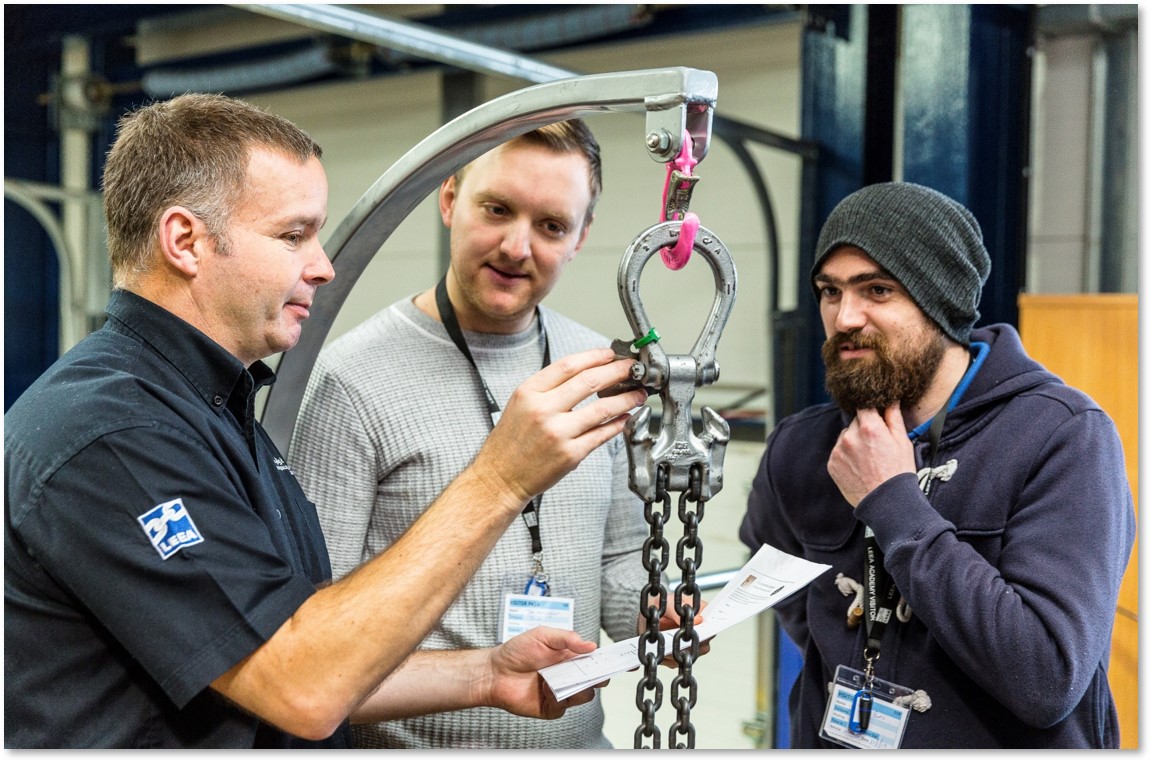
Over the next six months, the Lifting Equipment Engineers Association (LEEA) will be launching a new suite of training courses as part of the Association’s Academy 2.0 Project. EUG (End User Guidance) will be the first course to arrive, on 7 July 2022  – Global Lifting Awareness Day #GLAD2022. EUG will be available via LEEA’s website, leeaint.com, as an open link accessible by all. Also on this day, the ILE (Introduction to Lifting Equipment) course will be available to LEEA members in the ‘Members area’ of leeaint.com.

On 2 August LEEA’s all new Foundation Certificate training course – FOU (Global), will be available to all members on subscription. This course is available in English, Arabic, Bahasa, Brazilian Portuguese and Simplified Chinese. FOU (Australia) will also be introduced, which is essentially the same as FOU (Global) but with regional variations. Online examinations will be available for FOU Certificate training in all languages stated.


LEEA’s all new Lifting Accessories Diploma training course, LAC (Global), will be available to all members on subscription on 5 September. Replacing the previous ‘Lifting Equipment General (LEG) Diploma’, the course is available in English, Arabic, Bahasa, Brazilian Portuguese and Simplified Chinese. In addition there will be LAC (Australia), LAC (NZ) and LAC (USA) courses. These will replicate LAC (Global) but with regional variations.

With all courses available on LEEA’s new e-Learning platform, members can carry out their training when they want, how they want and for as long as they want. The platform is suitable for any device and has an offline study capability with auto-sync updates once back online.  LEEA has made a substantial investment into a technology upgrade In its Huntingdon training centre, making e-learning a real option for learners. Now equipped with high tech cameras, speakers, microphones and other equipment enabling, LEEA staff can hold classes with delegates from across the world and deliver training via Zoom with maximum effectiveness.

Andrew Wright, Deputy CEO at LEEA, said: “Five years ago, I delivered a presentation to the Associations’ Annual General Meeting (AGM), which was held during the LiftEx 2017 exhibition in Telford. I spoke of constraints in the current LEEA Academy, and a range of opportunities that LEEA’s Learning and Development team would be working to deliver for our membership in the future. This included a state-of-the-art learning management system, incorporating a new suite of Certificate and Diploma level training courses; training courses available in languages other than English; online examination and a digital TEAM card. These new courses listed here are fulfilling the goal laid out at the AGM. In addition our digital TEAM card is now being produced and holders will begin to receive their new cards shortly.”

Incorporating new ‘smart’ technology, the new TEAM Card will enhance security, provide instantly verifiable data when required, and will be instantly updated by the LEEA team when changes occur such as new validation dates, change of employment details, a new photograph and when new qualifications are added.

For further information, please contact This email address is being protected from spambots. You need JavaScript enabled to view it..

EEMUA Industry 4.0 webinar

EEMUA Industry 4.0 webinar – Free and Open to All on 7 July – Live online – 14:00-15:45 UK time / 15:00-16:45 Amsterdam / 08:00-9:45 Houston – – Experts from Radio Data Networks and the University of Bristol explore: robotics developments; sensor design and use for a ‘control and quality revolution’ in a more connected world – more details and registration at  

#Freewebinar #roboticsdevelopments #connectedsensors #industry4.0 

British Compressed Air Society strengthens distribution


The British Compressed Air Society (BCAS) has elected two new board directors, to further strengthen its representation of small to medium compressed air distributor members.

Wendy Hayward, Managing Director of Aircare Compressor Services Ltd and Dean Horn, Sales Director at Wearside Pneumatics Limited have now joined the team, with a remit to help enhance the range of services and support provide to distributors, which comprise over 50 per cent of the society’s membership base.

Wendy Haywood

In 1994, Wendy joined Aircare Compressor Services Limited (Aircare), which at that time was a fledging family business set up by her father Brian in 1991.  Then, only four-people strong and operating from Brian’s family home, Aircare presented diversity, opportunity, and scope for Wendy in a new industry.  Wendy became Managing Director of Aircare in 2010 and the business now operates from branches in Corby and Nottingham, with x employees.

Said Wendy:

I am excited by the challenge.  Distribution is a thriving compressor sales channel in the UK, comprising many small to medium businesses that have built up impressive customer portfolios and technical knowledge over the years.  However, as SMEs they face numerous challenges, such as staying abreast of legislative and regulatory change and ensuring staff are trained and developed continually - all while managing their own business and employees.

I hope that with my 30 years' experience in distribution I can bring first-hand experience of these challenges to the board and work with the team to further support our distributor members

Dean Horn

Dean has been working in the compressed air industry since 2006, holding numerous roles for Wearside Pneumatics, include office management, branch management and latterly as Sales Director.

Said Dean:

After more than 16 years in the industry, I felt it was time to give something back and am delighted to have this opportunity to help further support our distributor network. 

BCAS has an excellent reputation for providing timely and accurate information, backed by industry-leading training to its members; helping them to stay compliant and safe.  I am hoping to provide insight on how this information can be tailored further to support distributors, especially around the areas of energy-reduction and legislative compliance.

Vanda Jones, BCAS Executive Director concludes:

We send a warm welcome to Wendy and Dean and congratulate them on their new appointments. 

The British Compressed Air Society is committed to helping compressed air users operate more efficiently, compliantly and safely, so it is essential that we communicate effectively with all our members. 

From providing guidance on mitigating health and safety risks, to implementing compressed air energy saving initiatives during a time of unprecedented price increases, our distribution members have a key role to play in shaping the future of our industry.  We look forward to working with Wendy and Dean to better support our members in these challenging times.

International Women in Engineering Day: Meet the Women Helping to Change the Future of Fire Safety

FireAngel specialises in advanced fire, carbon monoxide and home safety technology and has achieved numerous safety industry firsts, deploying over 70 million products, and holding over 80 granted patents. Behind the scenes, its engineers Usha Hedge, Kirty Nagar and Swathi Kamble are helping the company to revolutionise the fire safety space. 

Despite the growing demand for tech talent, it’s still a male-dominated area with around three in ten roles filled by women. Why do you think there are so few females in tech? 

Usha Hedge, Firmware Engineer: The gender gap is not as simple as encouraging more women to enter the field or encouraging companies to recruit more women. It’s also an issue of retention. Research by the Global Talent Network, Adeva, found that over half (56%) of women in tech leave their careers at the midway point and the primary reason isn’t because they’re unhappy in their jobs. The timing of this movement is likely connected with a correlation that at this time, a woman also tends to start a family and must balance her career with childcare and new responsibilities. In a field that’s highly competitive and demands 100 per cent of your energy, this can be particularly challenging. 

What has been your experience of being a mother in tech? 

Usha Hedge, Firmware Engineer: I was lucky to be working at FireAngel when I had my first child several years ago. They gave me the opportunity to work flexible hours between home and the laboratory, despite there being no company policy to do so at the time. More managers across the tech world need to support women and have the conversation about flexible working to help diversify the industry. Flexibility and remote working in the recruitment process are two of the most effective diversity strategies noted by the 580 signatories of the UK Tech Talent Charter, a collective designed to share data, best practice, and progress on diversity in the industry. Making this common practice could keep more women in the field.  

What challenges have you felt being a woman in tech and how could this be improved? 

Kirty Nagar, Electronics Design Engineer: As women are underrepresented in the field, it can feel lonely. I think all organisations should have a channel or a group for women working in STEM to interact with other female colleagues to share support and guidance. The experience is similar in education, with a distinct lack of female role models. We need more organisations holding events at universities and schools and more female teachers, so that young women can learn about the opportunities available in STEM and hear from women that have progressed in the career. 

What motivated you to work at FireAngel? 

Kirty Nagar, Electronics Design Engineer: There are only so many companies with such a strong purpose. At FireAngel, it’s not just a matter of safety – but a matter of saving lives and there is nothing more precious. In multiple-occupancy houses, terraced homes, and high-rise buildings, a major fire does not just put a single household in danger but potentially hundreds of lives. I’m proud to work on technology that can help prevent a 999 call because I know I’m helping to protect people, their families, and communities. 

Swathi Kamble, Test Engineer: I like challenging myself and developing new skills and that’s what attracted me to the fire industry. The industry is currently recognising that the Internet of Things (IoT) promises to transform fire safety and having the opportunity to work on these types of projects from scratch to deployment is very exciting. With complex technical challenges along the way, it’s a big learning curve but I find it rewarding to know that I can make a difference to every step of the process. 

Local firms to collaborate on trial demolition job of one of Cumbria’s most iconic structures

Local firms to collaborate on trial demolition job of one of Cumbria’s most iconic structures

A FOCAL point of one of Cumbria’s most iconic skylines is set to be demolished - but not before a team of local experts complete an essential trial run to ensure the job can be carried out safely.

The Pile 1 iconic chimney has dominated the landscape over Sellafield for decades, but it will be brought down in the coming years as the structure is decommissioned.

Ahead of the demolition job, a collaboration of Cumbrian firms plan to construct a replica of the chimney and then use new hydraulic equipment to demolish it to prove that the chosen methods would work.

A planning application has been submitted to Copeland Borough Council to demolish the bespoke concrete ring which will be created to accurately replicate the chimney with the same circumference of 15m, but only 7m in height. The dummy structure will be cut down with a newly developed Hydraulic SPIDA machine designed by ADAPT, a joint venture consisting of companies Doosan Babcock, Atkins and Orano.

The SPIDA structure is being fabricated by Glasgow company Cairnhill Structures. It is planned that the machine and the mock concrete barrel will be transported to Leconfield Industrial Estate, in Cleator Moor, to be tested and commissioned before two rows are cut out as a trial ahead of the actual work at Sellafield.

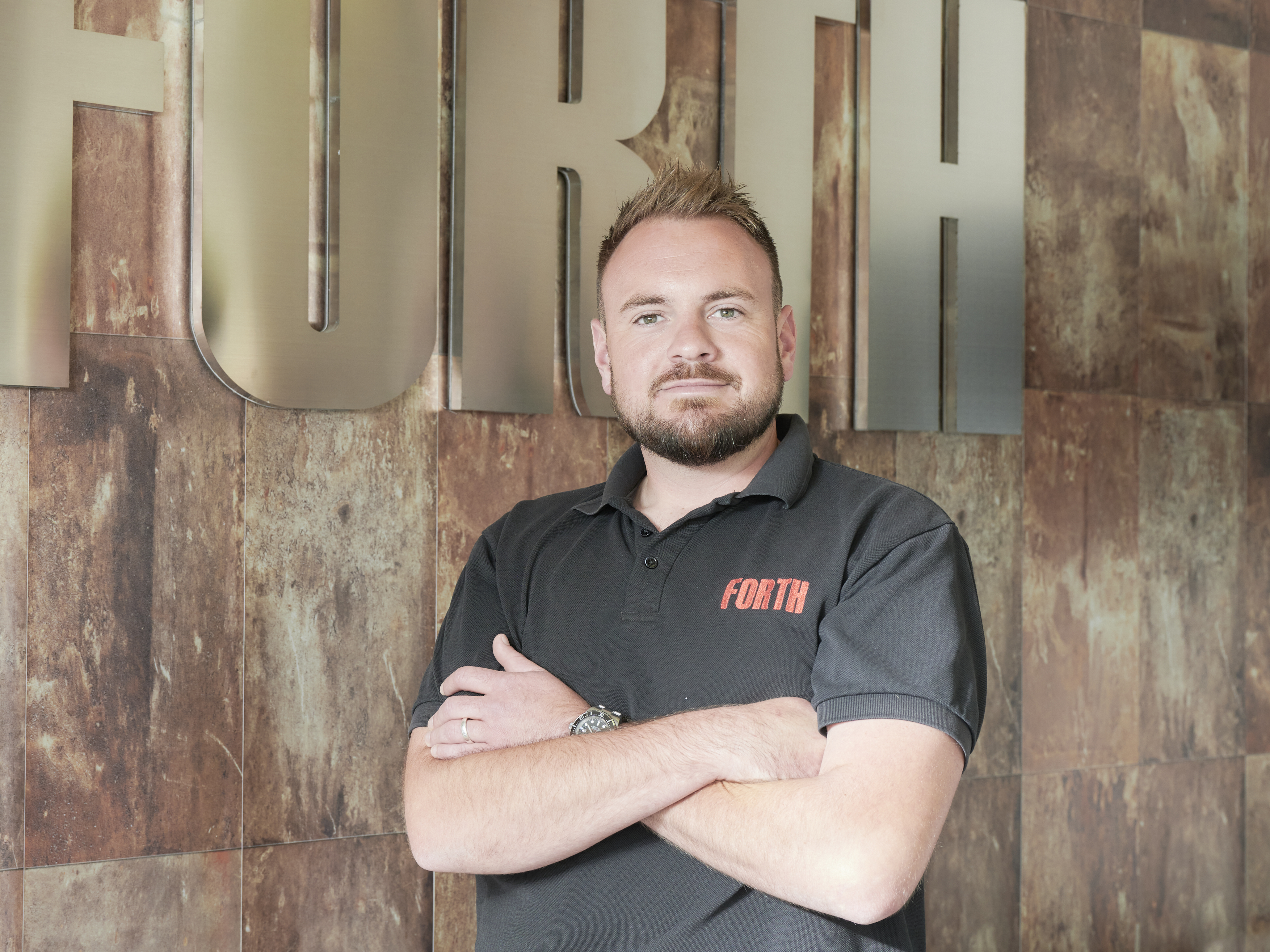
The trial is being facilitated by engineering firm Forth at the request of ADAPT.  Forth has bases across Cumbria including the proposed trial site at Leconfield.

The trial run is standard procedure within the nuclear industry and is deemed necessary to ensure working practices are safe and sustainable ahead of any demolition work on an active, potentially hazardous, site.

The trial works could last up to two years and, with an average of 30 people required on site each day, it is expected the project will create further job opportunities in Cumbria and also accelerate the plans for regeneration in Cleator Moor.

Graham Cartwright, the projects director at Forth, said: “What we are hoping to achieve with this project is to showcase the phenomenal talent and capabilities of the workforce in Cumbria to complete the required demolition job as part of such a major and landmark project for the local area.

“It’s about keeping, and creating, jobs locally, and preventing the workforce having to travel to Scotland to complete the project, thus reducing the carbon footprint of the project.

“Working together we can display all the skills needed and it will be a huge benefit to Cleator Moor and Cumbria for the job to be carried out locally.”

Paul Terry, Project Director for ADAPT said: “This proposal will make use of an unused area of the Leconfield Industrial Estate.  It supports our desire to keep things local, reduce travel and use local resources and supply chain wherever possible.

“This innovative project for Sellafield will also bring additional focus to the industrial estate as it starts to make progress with its regeneration plan.”

On completion of the trial work, the site at Leconfield will be cleared and returned to a similar condition to its current state.

Leconfield Industrial Estate, where this work is due to take place, is part of a wider Industrial Solutions Hub (iSH) campus which will enable further collaboration between industry and SMEs, creating employment and helping to regenerate communities across West Cumbria.

Cool successor with sustainable DNA

Coo l successor with sustainable DNA

Rittal is expanding its smart cooling unit solutions by adding the new Blue e+ S range. Our latest generation of cooling units with their lower output categories of 300, 500, and 1,000 W have been designed for efficiency, ensuring a smaller footprint and lower costs – just like their “bigger brothers.” So it’s a win-win both for users and for our future.

Solutions that reduce our carbon footprint during production are in high demand. But at the same time, these solutions need to be intelligent and communication-enabled so that they can be easily integrated into digitalised manufacturing environments. Seven years ago, Rittal responded to this demand with its Blue e+ range of cooling solutions and launched extremely efficient enclosure cooling units, which provided on average energy savings of 75 percent. Now we have a new generation – the next generation – but still developed with that same design DNA. These new cooling units with their lower cooling outputs of 300, 500, and 1,000 watts called “Blue e+ S” add to the Blue e+ family and bring with them additional smart capabilities. And furthermore, this new generation offers innovative energy-saving features for the production process.

What’s behind this energy-saving and therefore cost reduction is the technology used, combining a heat pipe with inverter-controlled components. The heat pipe works without a compressor, expansion valve, or other regulating elements and so does not need any electrical energy except to operate the fan. Depending on the thermal energy generated in the enclosure and the current ambient temperature, cooling can be performed with the heat pipe alone. The additional compressor cooling only operates if a large amount of heat has to be dissipated from the enclosure or if the ambient temperature is very high. And what’s more – when it does operate, it is far more energy-efficient than conventional units. This is because the compressor and fans possess an inverter-controlled drive, which automatically adjusts their speeds depending on the requirements. As a result, the temperature within the enclosure remains constant, and the energy efficiency is significantly higher than with other more conventional cooling units.

Staying cool all the time

Alongside energy efficiency, another feature also reduces the carbon footprint: The new Blue e+ S series uses a refrigerant with a GWP (Global Warming Potential) that is 56 percent lower than those used in comparable cooling units. Furthermore, instead of the R-134a previously used, the cooling circuit in the new generation of units now runs with R-513A refrigerant.

Smart communication-enabled capabilities

With their additional smart functions, the new cooling units also help in the digitisation process. With a fully integrated IoT interface as standard, the cooling units can be intelligently monitored in digitalised environments and easily connected to Rittal's new Smart Service Portal. This optimises the service processes and increases efficiency through predictive maintenance. As a result, fewer unplanned downtimes occur which all helps to manage the high cost of production, especially with Industry 4.0 processes.


Production-friendly facelift

These cooling units in the lower output classes have also undergone a facelift. Their most striking feature is an integrated coloured LED light strip. This means that warning messages can be immediately seen, even from far away. A display on the front of the enclosure provides additional up-to-date information. Moreover, the cooling units are equipped with the familiar NFC interface, which enables them to communicate with mobile devices that have the Rittal Scan & Service app installed.

For further information on the entire Rittal range visit  www.rittal.co.uk or check out our linkedin page @rittal-ltd-uk


Why I’m Rooting For Female Engineers

Why I’m Rooting For Female Engineers

 My thoughts and plans for this International Women In Engineering Day

By Claire Watson - Managing Director at Airmatic https://www.linkedin.com/in/clairewatsonairmatic

There are more women in engineering roles:


Recent data shows that around 16.5% of engineers are women, a 2% growth since the INWED Impact Report 2021 was published.

Whether it is an administrative, managerial or technical focus, statistics show that jobs in the engineering sector can often be overlooked by school leavers and women looking for a career change.

My name is Claire Watson and I’m the Director of Bury-based ductwork and fabrications company, Airmatic. This International Women In Engineering Day, I want to reflect on my own experiences, give food for thought and raise awareness in whatever way I can.

As women, there are still some obstacles in our way:


I have worked for Airmatic for over ten years, where we offer premium and bespoke environmental solutions for challenging workspaces through our ductwork and fabrications expertise. I became a Managing Director two years ago and now oversee the site’s day-to-day activities, focusing on levelling up our digital marketing strategy.

In the not-so-distant past during my career in engineering, there were several occasions when I would pick up the phone to help with an enquiry, and the person would ask to speak with a man instead.

I would be lying if I didn’t admit to feeling conflicted and confused when looking back on these exchanges, which have lessened over time, as I have stellar role models and cheerleaders of different genders that root for my success and have never insinuated that my gender is a weakness.

With the above in mind, it recently occurred to me that I have never received a CV from a female engineer for any openings at Airmatic. As the only woman that sits as an Executive Member in the Association Of Ductwork Contractors & Allied Services (ADCAS), this motivated me to think of ways to try and make a difference in our internal statistics and the boards and partnerships that Airmatic is involved with.

We are successful in engineering roles:


In the 1970s, my auntie was the first draftswomen in her place of work. She became my inspiration to thrive in this industry from a young age. Her success was a constant reminder that challenging stereotypes in engineering were possible and that I could build a successful career as a woman in engineering.


Fast forward to 2022, and I’m the first woman to become a Managing Director at Airmatic. The role is rewarding, challenging and full of potential. After recently completing an Oxford University course in Leadership, my eyes are open to the many existing and future opportunities available to Airmatic.

With the help of our team, I steered the Airmatic brand’s relaunch, built upon yesterday’s expert knowledge to recruit tomorrow’s forward-thinking talent, which was a massive milestone in my career.

Let’s inspire the female talent of tomorrow:


As women in engineering, our voices should be loud enough for young women and those searching for a rewarding career to hear. Awareness days such as International Women in Engineering Day are a vital part of this, where we can come together to shine a light on our ability and innovation.

I have made an application to become a mentor through The Girls Network, a charity that supports young women through their all-important journey to maximise their ambitions and reach their career potential. By doing this, I hope to share my experiences and encourage those I speak with to consider engineering as a career path.

Alongside this, we will be hosting an Airmatic open day for local secondary schools in the Greater Manchester area on the 7th of July, aligning with UK National Manufacturing Day. The positive action in the local community means a great deal to us, and we hope that young women of school leaving age will take inspiration from our numerous activities and maybe even see their future potential.

We can thrive together:


My preparation for this International Women in Engineering Day has been an enlightening experience that has paved the way for my future efforts to support fellow women in the industry. I aim to introduce more female figures to ADCAS, where like-minded people of all genders can exchange ideas and grow together.

I’ll be starting a recruitment search for the talent of tomorrow, liaising with Apprenticeship UK and

other government schemes to raise awareness of career and growth opportunities within the industry.

I would love to expand my network and welcome any fellow women in engineering to get in touch so we can learn from each other and make a difference. Our voices are louder together, so let’s do our part to increase the 16.5% statistic in time for International Woman In Engineering Day 2023.

Celebrating Women in Engineering

As International Women in Engineering Day is upon us, Siu Ho, Firmware Engineer at Casella, shares the challenges and opportunities for female engineers, her motivation for working in STEM and advice for women entering the field  

What was your motivation for working in STEM? 

Research has shown that children as young as six believe that girls aren’t interested in computer science and engineering, contributing to a self-fulfilling proficiency that girls ‘don’t belong’ in the field and to the gender gap in STEM education. As men tend to dominate the field, this can further discourage girls who have an absence of female role models. I was lucky to witness both my father and mother fixing things growing up, and they gave me hands-on experience too. Having the opportunity and encouragement to participate in less gender-stereotypical activities developed my passion for problem-solving and gave me the chance to imagine what a career in engineering could look like. 

Why did you join Casella? 

Casella is dedicated to cutting environmental and occupational health risks by developing equipment and technology that can improve and save workers’ lives. The company’s key specialisations include noise, vibration, boundary and air sampling monitoring, that can empower people, companies and communities to protect their health. I wanted to work for Casella because in doing so, I know that I’m helping to make the world a safer place. Casella has also invented a series of ‘world firsts’ including the first personal air sampling pump. Being at the forefront of innovation can accelerate the improvement of workers’ lives and I’m proud to be a part of that.  

The sector is aiming for a target of 1.5 million women working in STEM by 2030. This would equate to 30% of the workforce being female. How do you think we can move towards a more gender-balanced sector? 

As a firmware engineer, my focus is on the ‘T’ in STEM. Software is everywhere and having the ability to create and play with it is a superpower. Today’s young girls will be tomorrow’s workforce and they should be given the opportunity to learn programming from an early age, so that they can use science and technology to develop their own solutions and understand what they can achieve. There are programmes available that can teach children coding in bite-sized chunks, helping to instil problem-solving abilities. There needs to be a greater effort to incorporate these types of programmes into the education system, so that more girls can be introduced to the world of STEM from an early age. 

Why do you think there is such a small number of women pursuing STEM subjects and engineering as a career? 

The glass ceiling effect can be a concern, however, the sector is moving in a positive direction, so I think we need to raise awareness of what women can achieve in the field. In the past, we used maps to navigate our journeys. Today, we can find the fastest, smoothest route straight from our smartphones. There needs to a greater effort to highlight the positive aspects of the career because female engineers can change the world, one innovation at a time.  

What are the biggest challenges female engineers face, and what advice would you give to others thinking about entering the field? 

At university, I was one of five women out of a class of 70. In a male-dominated environment, it’s important to remember that your voice matters. Express yourself and don’t be afraid to share your opinions because they are just as important even if you’re the only female voice in the room. 

Can you tell us about any milestone moments in your career or notable mentors? 

Studying at university and within research centres was vital for learning the technical aspects of the field, however, it wasn’t until later in my career that I really developed my commercial awareness. Having an increased understanding of the way that businesses operate helped me to accelerate my career and I think there needs to be a greater focus on developing this within the standard curriculum. 

What future innovations are on your working on at Casella? 

I’m currently working on a new exposure monitoring device that can offer companies a more cost-effective method of making an exposure assessment, helping to identify workers at risk. It is important that the cost of monitoring devices is not a priority over employee health. Developing this new, lower-cost device will help to encourage more companies to protect their workforces and will join Casella’s range of products designed to help combat occupational disorders across the world. 

NOW AVAILABLE: ATEX Zone 1 Tablet iPad mini 6

Atexxo / Products / Ex Proof Tablets / Ex Zone 1 iPad Mini 6

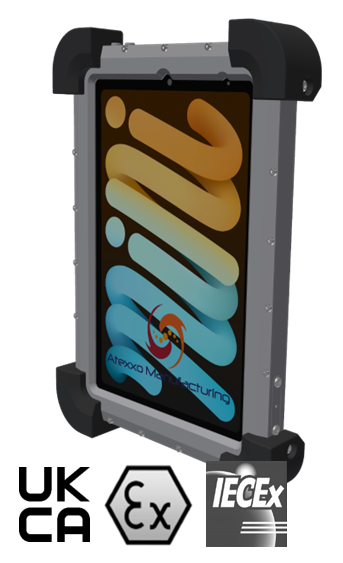
Explosion Proof ATEX / IECEx / UKCA Apple iPad Mini 6 for Zone 1

(Self sim-card installation and functional push buttons)

Explosion Safety

II 2G ; Ex db IIC T4 Gb

All new from Atexxo Manufacturing, the Apple iPad mini 6th generation now suitable for use in Zone 1 hazardous locations. The explosion proof iPads are originally manufactured by Apple than converted and certified according to ATEX and IECEx by Atexxo Manufacturing. This makes the tablets suited for safe use in gas /vapor zone 1 hazardous locations. ATEX Zone 1 is the European equivalent for US, NEC Class 1 Division 1 equipment. (C1D1)

Compliance with ATEX / EX regulations is achieved by modification of the casing together with the safe electrical circuit, which makes the tablets suitable for safe use in Zone 1 hazardous locations. All features of the original product are preserved, except for the fingerprint scanner.

The ATEX iPad mini 6 Zone 1 comes with an aluminum case finish and is available for both the WIFI only model and the WIFI  + Cellular 5G models. Beside safe use as smart tablet, both versions are excellent for use as safe video or photo camera with wifi or Bluetooth connection.

ATEX / IECEx Zone 1 iPad Mini 6 for Zone 1 & 2

Benefits:

  • Self Sim-Card Installation and Change
  • ATEX, IECEx and UKCA certified Zone 1 & 2
  • Patented Design
  • Quick and World Wide Delivery
  • Apple (open) Business Manager

Applications:

  • Petro (chemical) plants
  • Offshore environments
  • Ex safe camera
  • Connected worker / Industry 4.0
  • Digital twins at hazardous locations

Fore more information click the link below.

Ex Zone 1 iPad Mini 6 - Atexxo Manufacturing

New report acknowledges Ultimo as a leader in Enterprise Asset Management technology  

Specialist in Enterprise Asset Management (EAM) software, Ultimo has been successful in gaining even further industry recognition. The company is one of those highlighted in a new report by Verdantix, which conducts research and provides insight in relation to digital strategies.

Drawing on input from hundreds of highly experienced professionals surveyed, the Verdantix report, entitled ‘Green Quadrant: Enterprise Asset Management Software 2022’ provides a comprehensive, highly detailed comparison of the main software vendors currently serving the EAM market. It includes profiles of each of these vendors and describes the different software solutions they offer.

According to the report, the global EAM software market is being “driven by a new focus on cost savings, maintenance strategy digitization programmes, digital system amalgamation and sustainability.” It goes on to say that EAM software spend is “set to grow, with providers looking to differentiate through increased mobile and wearable functionality, rapid implementations, smart integrations and analytics for predictive maintenance strategies.”

“This is another powerful endorsement of Ultimo and what we are achieving within the EAM software sector,” states Ewout Noordermeer, Chief Marketing Officer, Ultimo. “Having an advanced EAM solution is now fundamental to modern organizations. It helps break information silos within departments to enable better knowledge-sharing, helping businesses move towards more productive, safe, and sustainable asset management strategies.”

“The report published by Verdantix places us at the forefront of EAM innovation. This, along with the other accolades we’ve received over the last year, will motivate us to further develop our offering to ensure it continues to help asset-heavy organisations optimise maintenance, improve performance and unlock new levels of operational efficiency,” he concludes.

To find out more, visit www.ultimo.com.

CLPA - A PARTNER IN ADVANCING INDUSTRY-WIDE TSN CONFORMANCE

The CC-Link Partner Association (CLPA) has announced that it is actively engaged with the Avnu Alliance, ODVA, OPC Foundation (OPCF) and PROFIBUS & PROFINET International (PI) as part of the TSN Industrial Automation Conformance Collaboration (TIACC). The organisations will work together to develop a unified conformance test plan for automation devices that leverage Time-Sensitive Networking (TSN), driving standardisation, interoperability and interconnectivity.

Bringing together key global industrial network and communications specialists, the TIACC is an industry-wide initiative aimed at developing a solution for TSN conformance. The CLPA, collectively with all other leading organisations, will develop and agree a single common conformance test plan to certify TSN-compatible products, in line with the IEC/IEEE 60802 TSN profile for Industrial Automation.

The resulting methodology and practices will be released for use to the entire industrial automation ecosystem. By doing so, the TIACC partners will promote the alignment of TSN-compatible solutions from different vendors, which is essential for the development of converged industrial automation networks.

The CLPA's commitment to TIACC is in line with the organisation's overarching strategy to drive the easy integration and openness of networks and devices from multiple vendors. In effect, the CLPA has a history of successful collaborations with other TIACC members, such as OPCF and PI, delivering interoperability and companion specifications aimed at maximising transparency between the different protocols available.

To further support interoperability, the CLPA also continuously invests in its standardised, global network of conformance testing facilities. These are engaged in the evaluation of devices that use CC-Link IE TSN, the first open industrial gigabit Ethernet with TSN functions. Using this real-world experience, and as part of TIACC, the association can contribute to the creation of robust practices to ensure TSN conformance.

John Browett, General Manager at CLPA Europe, comments: "The creation of the Connected Industries of the future requires different systems and devices to communicate in order to deliver the necessary process transparency required.  The belief in this principle is deeply rooted in the CLPA's ethos and at the core of why the organisation was founded. This is why we are delighted to be part of the TIACC and look forward to supporting the creation of a unified, common test plan for TSN-compatible products. By doing so, we can help further boost the adoption of futureproof technologies for smart manufacturing."


The CLPA is an international organisation founded in 2000 dedicated to the technical development and promotion of the CC-Link family of open automation networks. The CLPA's key technology is CC-Link IE TSN, the world's first open industrial Ethernet to combine gigabit bandwidth with Time Sensitive Networking (TSN), making it the leading solution for Industry 4.0 applications. Currently the CLPA has almost 3,800 member companies worldwide, and more than 2,000 compatible products available from over 300 manufacturers. Over 26 million devices using CLPA technology are in use worldwide.


CC-Link 
Tel: +81-52-919-1588
Fax: +81-52-916-8655
Web: http://www.cc-link.org


This website is owned and operated by: MSL Media Limited

msl logo
www.mslmedialtd.com

Co. Number: 05359182

© 2005 MSL Media Ltd. All rights reserved. E&OE

ems logo mobile