Fluke launches new adapter for the installation and maintenance of electric vehicle charging stations


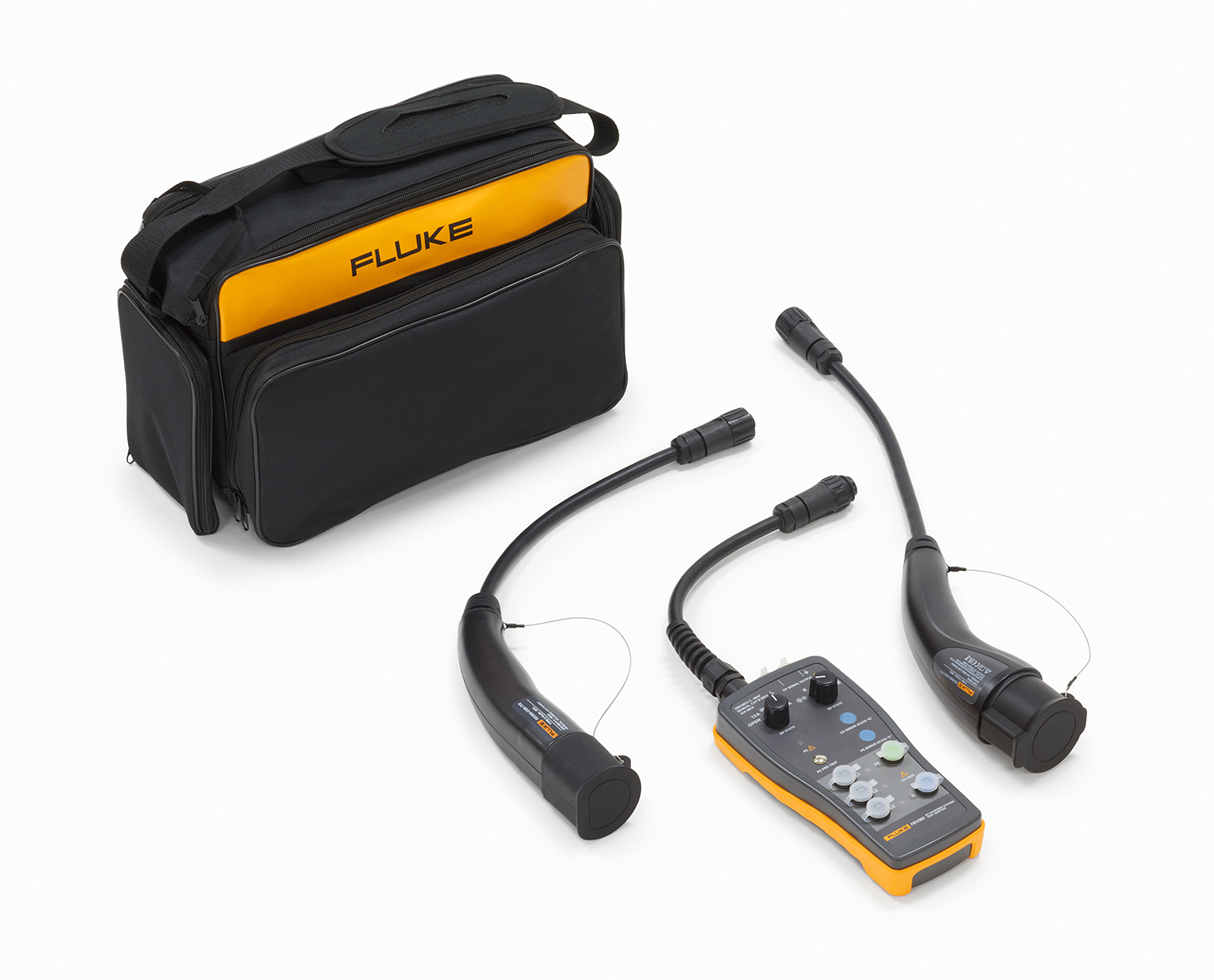
TheFEV300 Electric Vehicle Charging StationAdapter from Fluke is designed to simulate an electric vehicle for AC charging Mode 3 with connector types 1 and 2, allowingthe output of an Electric Vehicle Charging Station to be efficiently and safely tested.


: Fluke, a global technology leader in the manufacture of compact, professional electronic test and measurement equipment tools and software, has today launched the new FEV300 Electric Vehicle Charging Station Adapter for electric vehicle charging stations (EVCS). Designed to simulate an electric vehicle attached to the EVCS, the user-friendly tool allows for the output voltage of an AC charging station Mode 3 with connector types 1 and 2 to be safely and accurately tested in accordance with IEC/HD 60364-7-722 and IEC/EN 61851-1. 

Growth of e-mobility 

There are approximately 20 million electric vehicles on the road today globally, according to Bloomberg’s Annual Electrical Vehicle Outlook 2022. With rising fuel prices and new fuel economy regulations in many countries, the adoption of electric vehicles as alternatives to fuel-powered vehicles is expected to rise dramatically. Bloomberg suggests electric vehicle share of new vehicle sales market will grow to between 40 – 50 per cent in the UK, France and Germany by 2025.

EVCS are critical to reducing the charging time for vehicles. A typical, compact vehicle can take between 24 and 36 hours to charge from a domestic mains supply. An EVCS provides one or three phase supply with a mains voltage at 230 volts or 400 volts, charging electric vehicles much faster. For safety,communication between the charging station and the connected electric vehicle must occur before an output voltage is delivered. Adapters, such as the new-to-market FEV300Adapter from Fluke, are critical pieces of equipment used in the installation and mandatory routine testing of Mode 3 EVCS which provide accelerated charging of 3.7 kW to 22kW. 

Simple, safe and reliable

Testing of EVCS must be performed at regular intervals. There are local safety regulations, international and European standards, including the IEC/HD 60364-6, IEC/HD 60364-7-722 and IEC/EN 61851-1, to which installation and testing must adhere too. Both the safety and communication functions of an EVCS must be accurately tested to ensure the safety and efficiency of the electric system for the safe use by owners of electric vehicles. The tests required include continuity of conductors, insulation resistance, automatic disconnection of supply (loop impedance, RCD or RDC-DD test) and functional tests. All of which can be performed using a multifunction installation tester (MFT) such as the Fluke 1663 or Fluke 1664FC.

The FEV300 Adapter is compatible with Fluke’s leading MFTs used in the installation and commissioning of EVCS as well as routine maintenance tests. The FEV300 Adapter can also be paired with Fluke’s range of multimeters or scope meters for investigative troubleshooting.

Hans-Dieter Schuessele, Application & Technology Expertat Fluke says: “The energy which is transferred from an EVCS was previously mostly used in industrial environments – and now it is provided directly to private vehicles. Testing of these high-power, live voltage electric systems is critical to ensure the safety of end users, and the electricians installing and maintaining these essential pieces of equipment.

“The new FEV300 Adapter includes significant safety features such as a touch electrode function which quickly displays if there is a high-risk earth fault and improved safety sockets which are covered by plastic lids to protect the connectors in wet weather conditions. The safety aspects of Fluke’s new FEV300Adapter surpass other competitive products in the market.”  

Training the workforce to deliver the infrastructure 

Fluke is a leading provider of training programmes for the testing and installation of EVCS in Germany. The market for EVCS is booming, with extended waiting lists for charging stations to be installed. Infrastructure for EVCS across Europe doubled between 2020 and 2021 and is on track to deliver the same volume increase in 2022, according to The European Commission for Alternative Fuels Observatory. 

“The e-mobility market is growing at an exponential rate. Many general electricians are now seeking to upskill through certified training programmes for the installation and testing of EVCS to meet this demand. We identified a significant market need for an easy-to-use adapter that could be used for the safe installation and commissioning of EVCS as well as regular maintenance testing and troubleshooting,” said Schuessele. 

Fluke has a comprehensive range of rugged, handheld tools and software for e-mobility, allowing technicians to safely test and install charging stations for electric vehicles. Fluke’s solutions are designed for ease-of-use and include market-leading safety features that meet the stringent international and European safety standards for EVCS.    

For more information, about Fluke’s new FEV300 Electric Vehicle Charging Station Adapter, go to:https://www.fluke.com/en-gb/product/electrical-testing/installation-testers/fev300-connector-kit


TMS Tanker Conference - opening session focuses on tanker shipping post-pandemic

pandemic

Dubai, UAE: The seventh annual The Maritime Standard Tanker Conference takes place on 16th November at the Atlantis, the Palm, Dubai. A stimulating and thought-provoking program is rapidly taking shape that reflects the fact that this is a pivotal time for the tanker sector, as it not only emerges from the pandemic, but as other geopolitical challenges arise with uncertain consequences.

Many aspects of the business have been changed forever by two years of lockdowns and disruption to economic activity and trade. Now the world is wrestling with the impact of the conflict in Ukraine and what that means for the global economy as well as the specific patterns of oil and gas trades. In addition, tanker operators face the ongoing challenge of gearing their fleets to meet tough new environmental regulations in force now and in decades to come, and the drive to decarbonise operations.

One of the highlights of the TMS Tanker Conference is sure to be the opening Session 1 which has the theme ‘Tanker trades - recalibrating after the pandemic.’ Clive Woodbridge, Conference Editor, says, “The first main session in the morning sets the tone for what is going to be a really informative and energising day. After two difficult years caused by economic and trade upheavals during the pandemic, there remains a lot of uncertainty about the short and longer term outlook for tankers. We have been able to gather together a really top class set of speakers for the opening session who will get proceedings off to a strong, thought-provoking start with a series of presentations certain to trigger plenty of discussion and debate.”

Assessing the likely supply and demand balance will be a key task for Session 1 panellists, who will also assess changes to regional oil and petrochemical trade flows as well as likely tanker fleet growth projections. Other topics in this session include the effects of climate change actions on tanker shipping; the importance of scrapping older tonnage; the impact of digitalisation and the specific prospects of the gas carrier trades. Speakers will look at markets both from a global perspective and also at the specific characteristics of the Middle East and Subcontinent trades. 

To date speakers confirmed for the main Session 1 include: Capt. Abdulkareem Al Masabi, CEO ADNOC Logistics & Services; Dr Ibrahim Al Nadhairi, CEO of ASYAD Shipping and Drydock Services; Esam Khoori, Executive Director, Container Terminals, DP World UAE; Capt. Ammar Al Shaiba, Acting CEO – Maritime Cluster and Safeen Group, AD Ports; Nikos Michas, Global Tanker Segment Director, Lloyd's Register; Petros Doukas, Mayor of Sparta, President of Capital Partners and former Deputy Minister of finance & foreign affairs, Greece; Navin Kumar, Director Maritime Research, Drewry Shipping Consultants.

Clive adds, “We have speakers who can provide a macro economic background, and who can analyse in detail the key market trends, as well as executives at the front line in the ports, shipping and shipyard business sectors who can present a real-life assessment of how the market is evolving post-pandemic. 

For more information about the conference and how to register please go to: www.tmstankerconference.com

British Compressed Air Society encourages further compressed air energy-saving measures as Energy Bill Relief Scheme launches

The British Compressed Air Society (BCAS) welcomes the Government’s new Energy Bill Relief Scheme, which comes into effect from tomorrow, the 1st of October - but is encouraging compressed air users to also act now to minimise their compressed air energy consumption for the long-term through a series of low-cost measures.

With 10% of all the energy consumed by industry used to compress air, any Government programmes which can help mitigate for the unprecedented rise in the cost of business energy are very welcome, says Vanda Jones, Executive Director at BCAS.

“The scheme will apply automatic discounts to the price of business energy usage initially between 1 October 2022 to 31 March 2023.[1] While this will offer some relief to manufacturers and operators already struggling with soaring bills, the six-month time frame may not be sufficient to assist many end-users in the medium to longer term.

"Indeed, the cap still means that electricity prices for business customers will be around double the price per megawatt hour compared to this time last year.  Add to this the fact that generating compressed air can be very energy-intensive, representing as much as 30 per cent of a site's total electricity bill, and it is well worth operators considering further energy saving measures to help reduce their energy consumption, and therefore the cost burden further."

Earlier this year, BCAS launched its 10% Taskforce campaign, designed to encourage compressed air users to take simple steps to cut their compressed air energy figure by 10 per cent, by reducing wasteful and inefficient practices.  Vanda Jones continues:

"At the time we launched the campaign in April this year, we could not have predicted the huge rise in the wholesale gas and electricity prices. Our original calculations of £485.43 million being spent in wasted electricity have now risen two or even three-fold - meaning that the assistance now being offered through the Energy Bill Relief Scheme is vital.

"Since the launch, our members have been speaking with customers to encourage them to take action and to dispel some of the commonly-held beliefs that saving energy will require significant investment in new capital equipment.

"We have been demonstrating to operators that taking small, incremental steps can have a significant impact on reducing energy consumption.  This can include better housekeeping routines to avoid wasteful practices, fixing air pipework leaks, recovering heat which would otherwise be lost to the atmosphere, or implementing routine system maintenance."

The Society has a dedicated website at taskforce10.bcas.org.uk containing a host of end users hints and tips of simple ways that compressed air energy consumption can be reduced.  Free, downloadable guides are available (taskforce10.bcas.org.uk/simple-steps) as well as an area highlighting real examples of energy-saving measures that customers have implemented.

Businesses looking for further information and advice on ways to reduce compressed air energy consumption can contact their local BCAS member or visit taskforce10.bcas.org.uk


[1] https://www.gov.uk/guidance/energy-bill-relief-scheme-help-for-businesses-and-other-non-domestic-customers

Elddis Transport Boosts Fleet Utilisation with Freeway Workshop Software      

 Elddis Transport is rolling out new mobile working technology as part of a programme to fully digitise the workshop. Part of a fleet maintenance system from Freeway Fleet Systems, workshop fitters are being equipped with rugged tablets to replace paperwork. Freeway also receives daily vehicle inspection data from mobile devices used by drivers. With the addition of digital data from the workshop, Elddis will gain a complete and real-time insight into the status of the fleet.

Elddis is a well-established family firm specialising in the storage, supply and delivery of consumer goods for supermarkets and retail outlets. Headquartered in Consett in County Durham, the company operates a fleet of 150 vehicles and 360 trailers with additional depots in Heywood and Doncaster.

Through integration between Freeway and the Mandata transport management system (TMS), transport operations are given around-the-clock visibility of the status of the fleet. In turn, first-use-check data received from mobile data terminals used by drivers, the workshop is provided with immediate information on defects.

“With the digitisation of the workshop we are closing the information loop giving us 24/7 visibility on the status of the fleet,” says Alan Henderson, Fleet Engineer, Elddis Transport. “Freeway is proving invaluable as it links engineers with transport planners. This means we can reduce vehicle downtime and ensure the fleet is always operating at maximum efficiency and safety.

“For management, Freeway allows us to see the pressure points of resources so we can smooth things out. It’s a tremendous resource that allows us to better manage and optimise the use of all resources; assets and labour,” Henderson adds.

As well as receiving 700 daily vehicle check reports, Freeway also helps Elddis manage around 60 Preventative Maintenance Inspections (PMI) and MOT preparations each week.  Freeway stores parts data and builds records of use and performance over time. Through the mobile app Freeway, fitters have instant access to historical maintenance information so they can immediately spot recurring defects.

“Our ethos is to fix once. We particularly like the fact that we can use Freeway’s analytics functionality to drill down to access the performance and value-for-money of every asset – right down from an entire vehicle to an individual bolt,” says Henderson. 

One key feature of Freeway is ease of integration and Elddis see seamless communications between other supplier systems as important. As well as the TMS integration, Freeway has integrated with North East Trucks Spares (NETS) which enables automated replenishment of stock used in the workshop.  Elddis is also planning integrate Freeway with their local Mercedes dealership.

Web: www.freewayfleet.com 

New Industry Leaders Join Altus Factory of the Future Event

Altus Group has announced the addition of several new electronics manufacturers who will join the UK and Ireland’s leading capital equipment distributor, and event partner Fuji, for ‘The Factory of the Future’ on 19th and 20th October 2022.

Since organising the 2-day event, Altus has received so much interest from those interested in learning more about best-in-class technology and emerging processes that even more leading names in the industry have joined the line-up.

Four new speakers including kolb Cleaning Technology, Cencorp Automation, YJ Link and Quality Line will give informative presentations on everything from manufacturing process improvements, automation solutions, board handling and data analysis processes.

Joe Booth, Altus CEO said: “The response to our technology event has been very exciting! The market is keen to get out and take part, they want to listen, learn, meet suppliers and see brand new hardware as they plan for process optimisation projects for 2023.

“Partnering with Fuji, principal manufacturer of SMT and assembly machines and tools, has been ideal to add breadth. We will welcome a mix of existing users, new prospects and industry leaders creating a great melting pot for the event.

“Due to our raft of suppliers that want to support local engagement, we have been able to invest in the days and we hope to put on a memorable event for all involved and to add value to the sector by showcasing the best of the best.”  

As well as welcoming esteemed new speakers several manufacturers have been added to the demonstration floor. Over 25 machines will be on display including those from Magic Ray Technology, Global Datum Tooling, MP Dry Cabinet and I3 Automation being the latest companies to add hardware or demonstration software to the impressive array of solutions on show.

Both Altus and Fuji will be available to offer in-depth advice on equipment that will help to optimise processes, improve production through turnkey solutions, increase the level of quality and cut down overall cost.

‘The Factory of the Future’ will be held on 19th and 20th October 2022 at the Advanced Manufacturing Technology Centre (AMTC) in Coventry. To be a part of event and for further information visit www.altusgroup.co.uk

ICS Cool Energy Boost Free Heating Opportunities Adding i-FH Heat Pumps to its Hire Fleet

Customers can save energy hiring the new water-to-water heat pumps with near zero GWP R-1234ze refrigerant, benefiting from renewable energy heating.

  ICS Cool Energy, an international market leader specialising in complete temperature control solutions for manufacturing process and facilities applications, announced that it has expanded its i-FH (industrial free heating) rental fleet with new water-to-water heat pumps below 400kW of heating capacity. The new compact units in the ICS Cool Energy hire portfolio give customers more opportunities to lower their energy consumption and associated costs by moving to renewable energy heating.

The new i-FH water-to-water heat pumps feature near zero global warming potential (GWP) and non-flammable R-1234ze refrigerant and can deliver hot water at temperatures between 50°C and 80°C. Sourcing energy from waste-water or geothermal systems at 5 to 30°C, the units match conventional heating system requirements and are designed for applications like high temperature heating, sanitary hot water supplies, district heating and heat recovery cascades. Thanks to its compact design, the new units fit restricted spaces and are easy to move and install, which makes them suitable for small commercial buildings, industrial facilities, industrial processes and other applications within modern cities.

 “At ICS Cool Energy we want to combine the latest technology with decades of experience in process temperature control to meet the diverse and changing set of our customer cooling and heating needs,” said Dave Palmer, ICS Cool Energy general manager for UK and Ireland. “With concerns around rising energy costs and with growing sustainability efforts, we help our customers relieve their operational pressures. The new units in our i-FH free heating portfolio represent another step for us in the journey to offering most sustainable and most efficient heating solutions.”

ICS Cool Energy has a 500MW cooling and heating hire fleet at the customer’s disposal, accompanied by equipment capabilities and expertise to quickly respond to any customers’ temporary cooling and heating needs within their process, critical or comfort applications.

The new i-FH heat pumps and other solutions are available for short or long-term hire, as well as part of the FLEX Membership, long-term exchange programme, offering access to the latest heating and cooling equipment with the flexibility of an operating expense. As part of the ICS FLEX package customers receive the equipment, preventive and 24/7 emergency maintenance, as well as replacements and upgrades for an all-inclusive monthly rate. This allows them to transform their temperature control system from a fixed asset into a dynamic solution that will be up-to-date with their changing business and process needs.

For more information on ICS Cool Energy complete process temperature control solutions, please visit www.icscoolenergy.com/.

Parker engineering a greener future at bauma 2022


24 – 30 October 2022; Trade Fair Centre Messe München, Hall A4 – Booth 215

Parker Hannifin, the global leader in motion and control technologies, will be present at bauma 2022 to showcase a portfolio of its key technologies with the theme “Projecting and engineering a greener future”.

Featuring an ‘earth-moving’ centrepiece, Parker’s stand, at Booth 215 in Hall A4, will have a dedicated area for company experts to deliver more than 15 talks throughout the week on topics covering electrification, hydrogen technologies and material science, IoT, alternative fuel delivery systems, and engine and hydraulic filtration, among many others.

The company will present various solutions for the construction and mining industries. Visitors will be able to explore new products and learn about their technical specifications, capabilities, and benefits.

“We are excited to showcase Parker’s ground-breaking innovations at bauma this October. We see the expo as the perfect place to unveil our latest engineering breakthroughs for a greener future, helping the industry to address the twin challenges of increased productivity and profitable sustainability. We will be exhibiting reliable, optimized solutions, which enable vehicle electrification and digitalization, reduce carbon emissions, and transition diesel-powered platforms to alternative fuels like biodiesel or hydrogen – all while performing reliably and safely in some of the harshest environmental conditions,” said Joachim Guhe, Parker’s President for Europe, the Middle East and Africa (EMEA).

This year, Parker will address four topics that are crucial to the future evolution of construction and mining, and closely aligned with the two main themes of the bauma 2022 expo – sustainability and digitization:

  • Driving the energy evolution through alternative fuels and hydrogen
  • Achieving carbon neutrality via electrification and carbon-free construction methods
  • Implementing digitalization, IoT 4.0, and automation to improve reliability, safety, and productivity
  • Enhancing reliability and productivity, particularly in harsh conditions like mining and construction.

An early highlight in Parker’s bauma week will be a “bauma Special” Expert Insights talk on October 20th, featuring Paul Horvat, VP of Business Development for Parker’s Motion Systems Group, and Shawn Horner, VP of Parker’s Motion Technology Centre.

To learn more about Parker’s presence at bauma 2022, please visit Bauma 2022 (parker.com). To learn more about Parker’s bauma 2022 online platform, please visit https://parker.kubikconnects.com/offroadmachinery2022/home. Visitors will be able to watch select presentations recorded at the Parker booth and access information about highlighted product solutions.

Engineering and technology event inspires youngsters about future opportunities

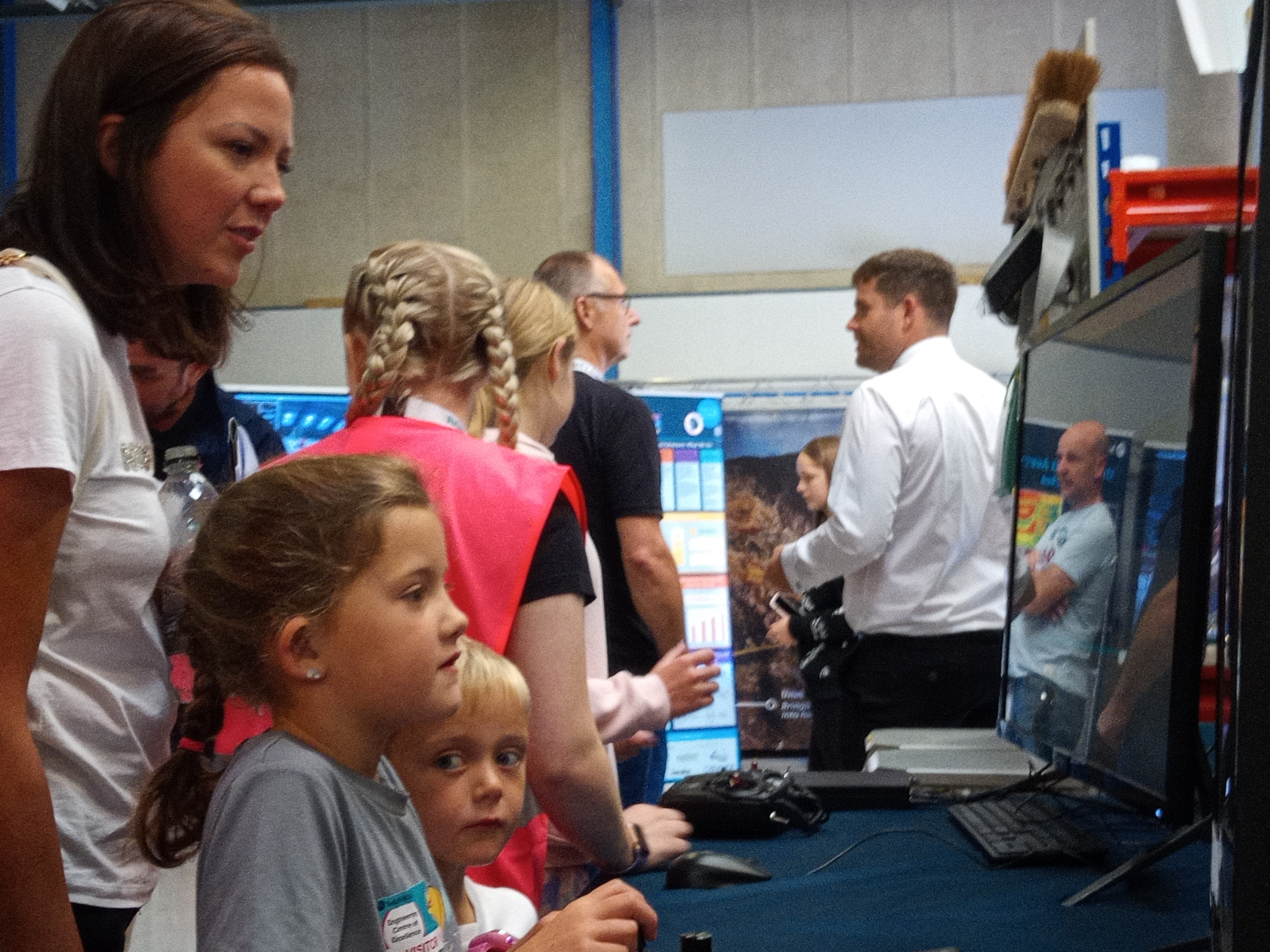
MORE than 100 young people, aged 5-13, were inspired by science and engineering when Sellafield Engineering Centre of Excellence hosted a UK-wide initiative.

The Institute of Engineering and Technology (IET) held events all over the UK in the school holidays to give young people hands-on experience of science.

Sellafield Engineering Centre of Excellence at Cleator Moor, with its dedicated innovation bays, was chosen as an ideal venue to show young people future opportunities.

Craig Branney, Sellafield’s Head of Off-Site Developments, said: “The buzz around the place was amazing. We had children and parents in all the bays having fun trying out the engineering challenges. It was fantastic to feel the energy and excitement.

“It was an honour to host such a prestigious nationwide event and hopefully we have inspired young people from all across West Cumbria what the future might look like for them.”

Holly Maxwell, Lead System Engineer, and Lorna Devine, System Engineer, both at Sellafield, attended the event to inspire girls about careers in engineering.

“It’s about showing young girls that females are engineers and all the opportunities are open to them. If we weren’t here maybe they wouldn’t see someone they identified with or were comfortable approaching to speak to and find out more. It’s about making sure those barriers don’t existing and showing girls that they can absolutely do this.”

Jenny and Peter McCullough were one lots of families attending the event. Their sons William and Thomas enjoyed taking part in some of the fun challenges.

Jenny said: “It’s great for them to actually see what goes on and be able to have a go at the hands-on stuff instead of just hearing about it from adults. It brings it to life and hopefully they see from a young age the possibilities which are open to them. You don’t know what you don’t know. So this is a brilliant way of showing them.”

Thomas said: “It’s been really good. Spot the Dog robot was amazing and it’s been fun being able to try some of the challenges.”

Shawn Ackerlay, commercial manager at Shepley Engineers, said his company sees the value in engaging with schoolchildren from a young age.

“It’s good to be here and show the young people what engineering is all about. I think it’s important to get this type of stuff into the curriculum so young people know more about it and further down the line they might choose an apprenticeship.”

Sellafield engineering manager colleagues Stephen Kitchen and Mike Foy, who represent the the Institute of Engineering and Technology, came up with the idea of holding the event at the Engineering Centre of Excellence and worked with Matt Walton, Senior Corporate Account Manager for the Institute of Engineering and Technology, to make the event a reality.

Artur Majchrowski, Sellafield Electrical and Electronic Engineering Graduate who is building a local IET group in West Cumbria, worked with colleague Dharmesh Premchande to deliver the event with the help of Claire Roper, Sellafield’s Engineering & Maintenance Capability Lead for Professional Development and Claire O’Connor, Sellafield’s Engineering Centre of Excellence socio economic lead.

Artur said: “It’s great for Sellafield to open its doors to kids in this way and the Engineering Centre of Excellence is the ideal place to do that.

“It’s all about encouraging kids and giving them a never-seen-before experience of what industry looks like.

“These sort of events couldn’t happen without the hard work of Claire Roper and Claire O’Connor. They work so hard on the work experience programmes to ensure as many young people as possible are given these opportunities and are inspired by engineering and STEM subjects.

“Everyone has come together to achieve this and make everything visible for the young people and give them this experience to show them what jobs and opportunities are open to them.”

The event is exactly the sort of activity to inspire people about future opportunities and create clear pathways into future employment and skills and training opportunities that iSH (Industrial Solutions Hub) wants to see.

iSH is set to transform Leconfield Industrial Estate in Cleator Moor by creating a campus where industry, SMEs, academia, and community come together to collaborate, as part of its wider programme across West Cumbria which will regenerate local opportunities.

John Maddison, Managing Director of iSH, said: “The more people we can introduce to the opportunities and the possibilities for them the better.

“I am sure many young people who have had this experience at the Engineering Centre of Excellence have gone away inspired about what they could achieve in the future.

“Congratulations to everyone who helped make this happen and inspire the young people. We look forward to being involved in future events and programmes to maximise this opportunity for everyone of all ages across the community.”

Aquapak partners with Industrial Physics to help customers transition to sustainable packaging

Aquapak Polymers, a leader in polymer technology that offers excellent functionality, recyclability and environmental credentials, has partnered with Industrial Physics, a global packaging, product, and material test and inspection partner, to create a harmonised set of WVTR (Water vapour Transmission Rate) testing methods for its Hydropol™ biodegradable polymer.

Hydropol offers all the benefits of traditional polymer plastics yet is water soluble and completely biodegradable as well as non-toxic and UV resistant. It also offers multiple end-of-life options such as recyclability, compostability and compatibility with anaerobic digestion plants.

Establishing a reliable and repeatable test method for WVTR is an industry-wide challenge. By using equipment designed by Industrial Physics’ product lines, including Systech Illinois, and Testing Machines Inc., Aquapak resolved to find a way forward by partnering with Industrial Physics, which will ultimately provide its customers across a wide range of sectors with a real alternative to using traditional polymers, helping them cut plastic pollution in the process.

Industrial Physics is a global test and inspection partner that works across a wide range of industry sectors to help customers protect the integrity of their packaging, products, and materials. The business is passionate about helping customers move to new, more sustainable packaging materials. The group is made up of numerous specialist testing brands, including Systech Illinois, TQC Sheen, Quality By Vision, Eagle Vision, Steinfurth, Technidyne, RayRan, Testing Machines Inc., and many more.

As more organizations continue to strive for sustainable alternatives, it’s unsurprising that demand for Aquapak’s Hydropol continues to grow – this is supported by Industrial Physics’ research that surveyed 255 packaging professionals around the world, highlighting that testing of new sustainable materials was a major challenge they face.

Almost half of the 255 global packaging professionals (49%) surveyed said meeting testing standards was one the biggest challenges they faced in wider adoption of sustainable packaging materials.

An example of this is that current WVTR test methods and standards are based around traditional polymers rather than sustainable, biodegradable alternatives such as Hydropol.

In order to continue their drive towards sustainable innovation in a way that didn’t sacrifice the integrity of their product, Aquapak approached Industrial Physics to support them in developing a repeatable and reliable test method for WVTR (Water Vapour Transmission Rate) for its Hydropol biodegradable polymer. 

The WVTR test method is a known challenge for hydrophilic polymers, and the team at Aquapak were looking to utilise knowledge and resources from Industrial Physics to develop a testing method that could be carried out in-house as well as replicated at its customers premises wherever they were in the world. 

Max Phippard, Quality Control Manager at Aquapak said: “Allowing the WVTR test to reach equilibrium means that we are confident in the results. Over the last few months, we have carried out full analysis of multi-layer samples to gain an understanding of how our customers can replicate their own WVTR testing regime on Hydropol.”

He continued: “Being able to build a relationship with Industrial Physics and leverage their expertise in packaging barriers was critical to the success of this programme.” 

Alan Shema, Product Line Director at Industrial Physics said: “We have reached a point where the WVTR test on Hydropol can be replicated anywhere in the world by using the approach taken by Aquapak and ourselves. This is a major step forward because it will shape how hydrophilic films are tested in future. It allows our global customers who source sustainable packaging materials such as Hydropol to carry out their own WVTR knowing they can trust the results.”

Phippard added: “As highlighted in Industrial Physics’ research, businesses face challenges when looking to switch to new, sustainable packaging materials. Developing a WVTR approach for Hydropol is one of the ways we are supporting our customers as they take this journey.

Industrial Physics offers a range of packaging, product, and material integrity testing solutions to food and beverage, flexible packaging, medical, pharmaceutical, and coatings markets. The company adopts a collaborative approach with customers to help them work through the challenges of moving to sustainable packaging. 

Industrial Physics carried out research with 255 packaging professionals earlier this year. Full results can be view at Industrial Physics Sustainable Packaging Research Report.

For more information about Industrial Physics click here.

To find out more about Aquapak, visit: https://www.aquapakpolymers.com/ 

IFS Ultimo helps BEAT Cycling Club gain the insight needed to grow to ProTeam level

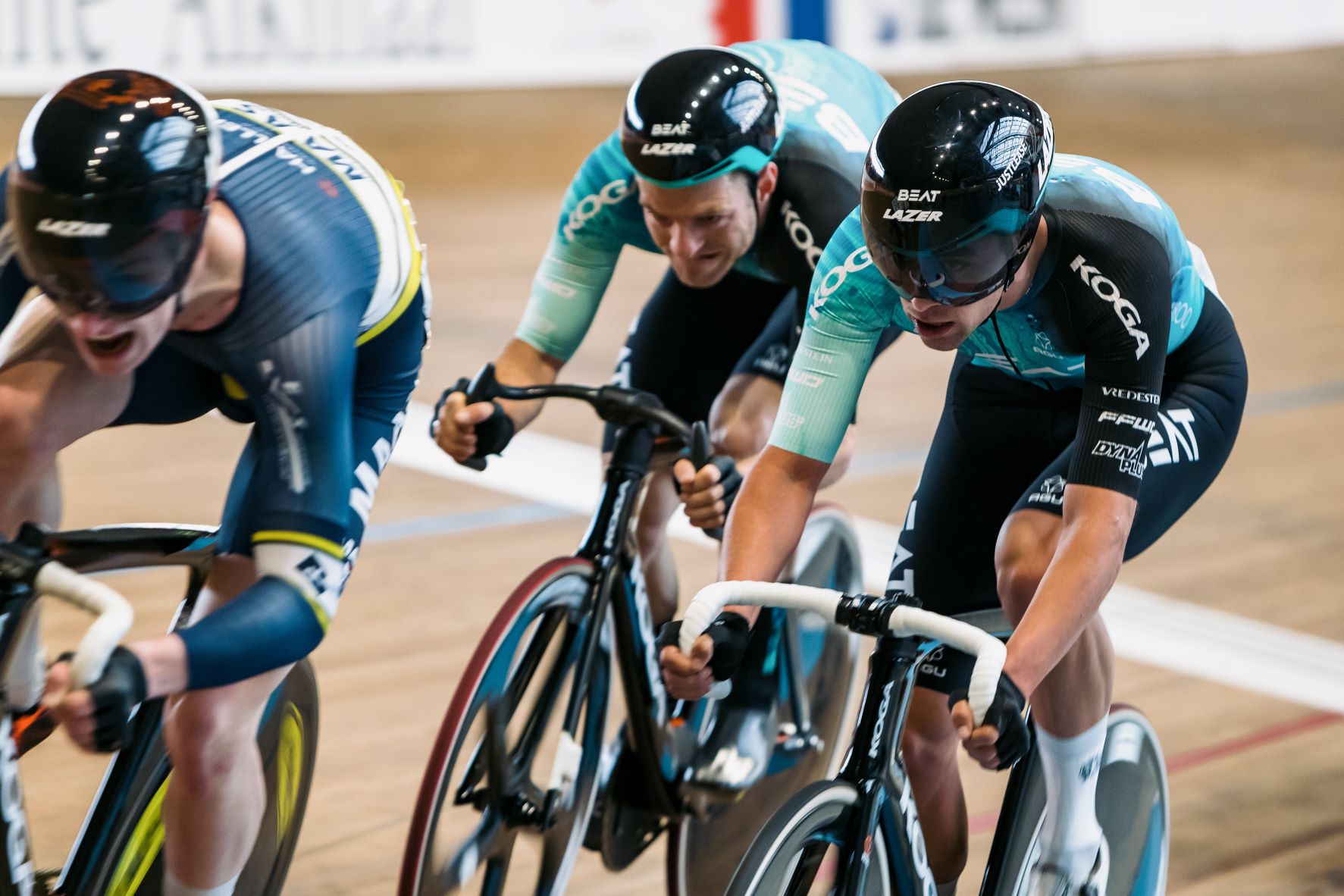
Nunspeet-based Enterprise Asset Management (EAM) software provider IFS Ultimo has announced a technology sponsorship with BEAT Cycling Club, a UCI Continental road and track team based in the Netherlands. The partnership sees IFS Ultimo commit to supporting BEAT with EAM technology for at least two years. Ultimo’s software will help the BEAT team take their ambitions and growth to the next level.

“At BEAT, we are constantly working on improving ourselves and driving new innovation,” Geert Broekhuizen, Founder & Director, BEAT Cycling, said. “When working on professionalising and growing our organisation, we ran into issues managing our bikes, cars and stock. With their leading software solution, Ultimo will help us overcome this by providing the insight we need to determine if essential bike parts are race-ready, likely to need replacing while on the road, or undergoing maintenance in our workshop. This approach allows us to be more sustainable with spare part management. But more importantly, as every rider knows, proper maintenance helps win races."

Ewout Noordermeer, CMO, Ultimo, commented: "At Ultimo, we help organisations gain better control over their assets, optimise availability, manage costs and guarantee safety. It doesn't matter if we are talking about a chemical plant or a professional cycling team; the process is essentially the same. BEAT encompasses growth ambitions, an innovative approach and a sustainable character, so we are extremely proud to support their journey to becoming a UCI ProTeam.”

Ultimo and BEAT Cycling are working on a short documentary that will provide a behind-the-scenes look at the collaboration between a professional cycling team and a leading EAM software company.

To find out more, visit www.ultimo.com.

IoT Interoperability – Living the Dream


With the arrival of cost-effective Satellite IoT (SatIoT), Systems Integrators are rushing to meet the huge pent-up demand for global solutions that allow asset tracking across the 85% of the planet not covered by cellular networks. They are building fully connected IoT solutions, where mobile assets can be tracked as they move, seamlessly connecting to an array of networks, from Cellular to LoRaWAN, Sigfox, and Satellite.


Some are making the promise of the one-size-fits-all approach, relying on future 3GPP standards. Is this a safe bet for systems integrators? While it is technically feasible to use existing terrestrial protocols to communicate with satellites, it is far from optimal in terms of performance. IoT is hugely sensitive to cost and power consumption and such degradations could rapidly derail the IoT business model. Minor differences in performance, like battery life and or device lifetime, can radically change the viability of the business case. Building intelligent devices capable of seamlessly switching between several technologies, each of them being highly optimized for specific conditions is the soundest approach. 


Fabien Jordan, CEO, Astrocast, explains why Systems Integrators need to explore Astrocast’s proprietary data protocol that has been designed specifically to optimise every aspect of the SatIoT component.


Compelling Opportunity

2022 is the year IoT goes truly global, with low cost SatIoT solutions providing the chance to track assets in even the most remote locations across the world for the first time. With the ability to cost effectively connect the 85% of the world not covered by cellular networks, the dream of seamlessly collecting data from assets as they move between networks – from cellular to satellite – is incredibly exciting.

Supply chains can be transformed by continuous tracking of shipping containers. Agriculture revolutionised through remote monitoring of both animals and environmental factors such as moisture, helping to reduce reliance on antibiotics and optimise the use of scarce resources such as water. Environmental understanding and strategies fast-tracked using data from monitoring oceans to understand change.

In the drive to meet the huge pent up demand for a seamless global IoT solution, however, it is vital to retain focus on the core components of IoT success. These deployments involve tens, even hundreds of thousands of devices, generally in inaccessible locations. Device lifetime and form factor is key to the business case – that means thinking carefully about everything from battery life and size to updates, frequency of transmission and antenna design.

Standards Debate

This is a new market and the challenge for Systems Integrators is to achieve integration without compromising performance or undermining the business case. And this is where the debate now lies: should the industry rely on cellular IoT standards only in the hope that they might one day be satellite-compatible and hence minimise device complexity? Or, should they bet on the operational performance benefits of combining the available and highly-efficient proprietary SatIoT data protocols with cellular and LPWAN technologies, making mass scale deployment financially viable for the first time?

In theory, it makes great sense to adhere to industry standards in any technology deployment. It provides application longevity and improves agility. However, there is little value in taking this approach if performance is fundamentally compromised, especially with such a financially sensitive business case.

Right now, there is no standard for SatIoT deployment. The proposed 5G NB-IoT standards are years away from full ratification. On top of that, NB-IoT is real-time only. It doesn’t support store-and-forward operations, which is absolutely critical to have when operating through a network of LEO (Low-Earth Orbit) satellites. From the satellite perspective, there is also huge complexity created by the need to manage the many different frequencies used on the ground by NB-IoT devices. This problem is rarely mentioned but is probably the biggest challenge to overcome as the satellites will be much more complex and costly, making the business case harder if not impossible to close.

Similarly, some Systems Integrators are exploring the use of the established LoRaWAN standard over satellite. This could be achieved over licensed or unlicensed spectrum. But in both cases there are some serious road blocks to overcome to enable important features such as bi-directional communications or store-and-forward capabilities.

Additionally, both 5G NB-IoT and LoRa over satellite have much more data overhead than an optimized proprietary protocol like Astrocast, resulting in much more energy consumed per byte sent. While these standards would theoretically simplify the deployment model, the use of non-optimised data protocols for the SatIoT component has a devastating impact on IoT device performance – an impact that destroys the IoT business case.

Optimised Deployment

Proprietary data protocols have been a core component of the SatIoT development model for good reason. Optimised deployments are lower cost, more reliable and higher performing, especially in key areas such as power consumption, which can make or break an IoT deployment. Excessive power consumption significantly reduces battery life, leading to expensive battery / device replacement, which is impossible for goods in transit and extremely challenging in remote locations. A device using a generic network standard for SatIoT will use up to 10 times as much power when compared to a device using SatIoT with optimised data protocol and chipsets.

Furthermore, it is not possible to simply add a SatIoT connection to an existing device, even if using the same network standard such as LoRaWAN. This is not plug and play, devices will need a new antenna or a new radio frequency (RF) front-end to connect to the satellite. In which case, it makes far more sense to use optimised data protocols and devices with a chipset optimised for SatIoT. Devices need to be small enough to be used on livestock – including small, flat antennas that don’t get caught in vegetation – and robust enough to withstand years outside without needing to be replaced.

Two-way communication is also key, providing remote device upgrades to further extend their life in the field. It also enables innovative IoT applications – such as the creation of virtual fences for livestock, eradicating the need for expensive and resource intensive work to install and maintain fencing across remote areas.


Conclusion

The use of proprietary data protocols is not a barrier to deployment but an enabler. Systems Integrators can create solutions that use multiple networks to track items across the world. One recent deployment for shipping containers moves seamlessly between multiple different connectivity solutions, including Bluetooth, cellular, LoRaWAN and satellite, as required. Organisations can opt to change the primary network at any time – ensuring the device connects to SatIoT rather than cellular in certain high cost regions, for example, to achieve far more certainty in the operational cost base.

The key is to ensure the deployment model supports rather than undermines the IoT business case. How often does the device need to communicate with the satellite? What is the power consumption? How long is the battery life? Is the antenna design fit for purpose? Does the solution support bidirectional communication? These are the critical issues that will affect the cost, viability and business benefits of the SatIoT deployment – and the optimal performance can only be achieved through the use of dedicated, optimised data protocols.

For now, full integration is the long term dream and at some point over the next decade, standards will emerge. To maximise the power, potential and cost benefits of SatIoT today, the use of dedicated proprietary protocols will remain the best way to developing a robust, achievable business case and accelerating the deployment of IoT.

This website is owned and operated by: MSL Media Limited

msl logo
www.mslmedialtd.com

Co. Number: 05359182

© 2005 MSL Media Ltd. All rights reserved. E&OE

ems logo mobile